AI’s Memory Grab Sends Laptop Prices Soaring, Raising Fears of Widening Digital Inequality on Campuses as Budget Models Vanish

With a decade of experience in education journalism, Lauren Robinson leads The EduTimes with a sharp editorial eye and a passion for academic integrity. She specializes in higher education policy, admissions trends, and the evolving landscape of online learning. A firm believer in the power of data-driven reporting, she ensures that every story published is both insightful and impactful.
Input
Modified
AI data centers secure priority access to memory production lines
Laptop and electronics prices rise in succession as PC DRAM and CPU costs surge
Gaps in device access widen into disparities in class participation and academic performance
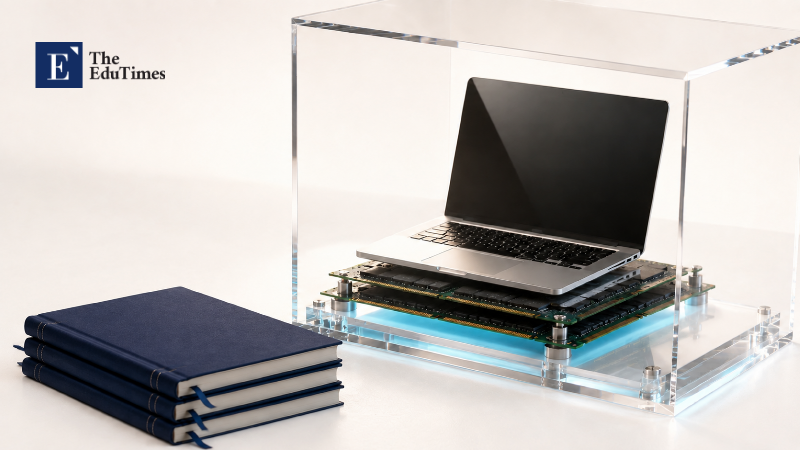
Competition to expand artificial intelligence (AI) data centers is driving up laptop prices. Semiconductor manufacturers have concentrated production capacity on high-margin high-bandwidth memory (HBM) and server DRAM, tightening supplies of PC DRAM and NAND, while higher central processing unit (CPU) prices have further driven up finished-product manufacturing costs. Following Apple, Samsung Electronics and LG Electronics, Amazon has raised prices on its own devices by as much as 60%, rapidly pushing budget-friendly products out of the market. This has fueled concerns on university campuses, where high-performance laptops have become essential learning tools, that disparities in device access based on students’ financial circumstances could evolve into digital inequality that determines academic outcomes.
The Disappearance of Budget Laptops
According to The Guardian on Aug. 26, the memory supply crunch triggered by competition to expand AI data centers is simultaneously pushing up laptop prices across major economies. In the United States, Apple’s price increases in June marked a turning point for laptop inflation. The MacBook Neo was repriced from $599 to $699, while the 512-gigabyte (GB) MacBook Air rose from $1,099 to $1,299. The 1-terabyte (TB) MacBook Pro also climbed from $1,699 to $1,999, broadening the scope of price increases from entry-level to premium product lines.
Price increases have been even steeper in South Korea, where additional hikes have followed already elevated launch prices for new products. Samsung Electronics raised prices on key laptop models by as much as $652 in April, while the Galaxy Book6 Pro, equipped with 32GB of memory and a 1TB solid-state drive (SSD), surged to approximately $3,037, 49% more than a comparable model last year. LG Electronics launched the 2026 Gram Pro 16-inch model at approximately $2,276 before raising the price by another $290 three months later to approximately $2,566. With market research firm Omdia reporting that the price of a 16GB double data rate (DDR)5 module jumped from $72.20 in the fourth quarter of last year to $119.20 in the first quarter of this year, analysts increasingly attribute a substantial portion of the increases to higher memory costs.
In China, actual transaction prices on e-commerce platforms have begun fluctuating ahead of manufacturers’ official factory-gate prices. According to Chinese media outlet China.com, Lenovo’s Xiaoxin Pro 16 rose from approximately $857 in June to approximately $1,162 in August, while another popular model surged roughly 50% from approximately $1,374 to approximately $2,057. Despite the summer season typically generating a back-to-school sales boost, newly released products priced below approximately $743 have disappeared, while student models have become approximately $74 to $149 more expensive. The combined price of a back-to-school package comprising a laptop, smartphone and tablet PC has also risen from just over approximately $1,486 last year to around approximately $2,229 this year.
Table 1. Key Factors Driving Laptop Price Increases
| Category | Major Change | Key Figure | Impact on the Laptop Market |
|---|---|---|---|
| Reallocation of memory production capacity | Major manufacturers prioritize wafers and equipment for HBM and server DRAM | Every additional bit of HBM production reduces commodity DRAM supply by 3 bits | Reduced supply of DRAM and NAND for laptops |
| Expansion of data center demand | Data centers secure high-performance memory and server products through long-term contracts | Data centers expected to absorb more than 70% of high-performance memory output this year | Intensified competition among PC manufacturers to procure memory |
| Rising PC memory prices | Procurement costs for laptop DRAM and SSDs surge | PC memory contract prices nearly doubled quarter on quarter in the first quarter | DRAM and SSD share of laptop manufacturing costs rises from around 15% to more than 30% |
| CPU price increases | Intel raises prices on some entry-level and older laptop CPUs | Price increases of more than 15% | Greater combined cost burden from memory and CPUs |
| Pass-through to finished-product prices | Manufacturers and retailers pass higher costs on to consumers to preserve existing margins | Memory and CPU share of costs rises from 45% to 58%; prices of mainstream $900 products could increase by as much as 40% | Greater pressure to raise prices and reduce specifications, particularly for entry-level products |
PC Memory Shortages Driven by Priority HBM Production
The price surge originated in the reallocation of memory production capacity. As demand from AI data centers soared, major manufacturers prioritized wafers and equipment for high-margin HBM and server DRAM. According to Micron, as cited by The Wall Street Journal (WSJ), every additional bit of HBM production reduces the supply of commodity DRAM by 3 bits. With data centers expected to absorb more than 70% of this year’s high-performance memory output and server products also being secured through long-term contracts, PC manufacturers have entered a procurement race for the remaining supplies of laptop DRAM and NAND. As a result, contract prices for PC memory nearly doubled quarter on quarter in the first quarter of this year.
Higher CPU prices have further intensified upward pressure on finished-product prices. According to market research firm TrendForce, DRAM and SSDs typically accounted for around 15% of laptop manufacturing costs, but that share is estimated to have exceeded 30% in the first quarter of this year. Intel also raised prices on some entry-level and older laptop CPUs by more than 15%. The combined share of memory and CPUs in total production costs expanded from roughly 45% to 58%, suggesting that the retail price of a mainstream laptop previously priced at $900 could rise by nearly 40% if manufacturers and retailers maintain their existing margins. This explains why pressure to raise prices and reduce specifications is more pronounced among low-margin entry-level products than among premium models, whose manufacturers have greater capacity to absorb higher costs.
Amazon Abandons Price Defense and Raises Device Prices Across the Board
Such cost pressures have also been reflected in Amazon’s pricing for its own electronic devices. According to U.S. technology publication The Verge, Amazon recently raised U.S. prices on Echo speakers, Fire TV devices, Kindle e-readers and eero routers by as much as 60%. The entry-level Echo Dot jumped 60% from $49.99 to $79.99, while the Fire TV Stick 4K Max became 41.7% more expensive, rising from $59.99 to $84.99. The base 16GB Kindle was repriced at $149.99, an increase of 36.4%, while the Fire TV Cube rose 42.9% to $199.99.
The scale of the increases varied markedly by product category and specifications. Within the Echo lineup, the entry-level Dot rose 60%, compared with a 20% increase for the higher-end Dot Max. Kindle increases declined by product tier, with the base model rising 36.4%, the Paperwhite 25% and the Colorsoft 16%. By contrast, the entry-level Fire TV HD rose only 14.3%, while the 4K Plus and Cube jumped 40% and 42.9%, respectively, placing a heavier burden on high-performance models. With prices unchanged for Ring cameras and video doorbells, as well as the $219.99 Echo Studio, Amazon appears to have calibrated its increases according to the cost burden and sales conditions of each product.
Amazon cited soaring procurement costs for memory and storage devices as the direct reason for the adjustment. The company said it had absorbed rising component costs across the consumer electronics industry for as long as possible but could no longer maintain its previous prices. According to U.S. technology publication TechRepublic, even the Fire TV Stick HD, launched at $34.99 in April, rose to $39.99 only four months later, sharply shortening the lag between cost shocks and their pass-through to retail prices. As upstream supply-chain price shocks ripple beyond laptop manufacturers and disrupt the pricing strategies of smart-home and content-device providers, the range of costs borne by consumers is also widening.
High-Performance Laptops Become Classroom Essentials
The repercussions of soaring laptop and electronics prices could be felt particularly acutely on university campuses. As more courses presume access to a personal computer for viewing lecture materials, submitting assignments, coding, design work and AI training, laptops have effectively become indispensable learning tools. For students already required to cover tuition, housing and textbook costs, even several hundred dollars in additional spending represents a significant burden. If product prices and university hardware requirements rise simultaneously, students’ level of classroom preparedness could begin to diverge according to their financial circumstances.
The cost burden is particularly steep in disciplines such as engineering and architecture, which require high-performance computing. Louisiana Tech University’s College of Engineering and Science lists a 13th-generation or newer Intel Core i7 or AMD Ryzen 7 processor, 16GB of RAM and a 512GB SSD as minimum laptop specifications for the 2026–2027 academic year. For advanced modeling and simulation work, it recommends 32GB of RAM, an Nvidia RTX-series graphics card and a 1TB SSD. The University of Illinois School of Architecture similarly recommends 32GB of DDR5 RAM, an RTX 4050 or better graphics card and a 1TB to 2TB SSD, making it difficult for entry-level products to handle coursework in the major.
A larger problem is that students face constraints even when attempting to reduce costs by opting for lower device specifications. Louisiana Tech explicitly states that Chromebooks and low-power tablets are unsuitable for running engineering software and does not recommend Apple Macs because of software compatibility issues. The University of Illinois School of Architecture likewise advises that certain Revit functions and Grasshopper plug-ins are available only on Windows, while base-model M1 through M3 devices and Intel-based Macs are excluded from its recommendations. Switching to cheaper devices or delaying the replacement of existing products is therefore highly likely to reduce classroom efficiency.
Widening Digital Divide Among University Students
As equipment costs rise, the burden inevitably becomes heavier for students with little room in their living budgets. A survey by The Hope Center for Student Basic Needs of 74,350 students at 91 colleges and universities across 16 U.S. states during the 2023–2024 academic year found that 73% had experienced basic-needs insecurity, including difficulties with food, housing, internet access or technology. Among respondents who had stopped their studies or considered doing so, 79% cited basic-needs or financial circumstances, including insufficient living expenses, the cost of textbooks and course materials, and technology access problems. Rising laptop prices would add further financial pressure that could jeopardize students’ ability to continue their education.
These financial disparities are already translating into differences in actual device access. A survey by U.K. education technology organization Jisc of 15,398 students at 30 higher education institutions during the 2024–2025 academic year found that 37% had experienced disruption to their studies because they lacked access to a suitable device. Sixty percent had encountered Wi-Fi problems on or off campus, while 39% held paid jobs that could affect their studies because of cost-of-living pressures. By contrast, 86% rated their university’s digital learning environment as average or above average, revealing a disconnect between the environment provided by institutions and the learning conditions students actually experience.
Differences in device access can affect class participation and ultimately influence academic performance and graduation timelines. A study published last year in the international academic journal PLOS ONE analyzed the digital access conditions and academic outcomes of 1,106 undergraduate students at Rutgers University in the United States. The study found that students who relied on underperforming or shared devices and unstable internet connections had lower levels of proficiency in remote learning and were more likely to receive an incomplete (I) grade or experience delayed graduation.
With a decade of experience in education journalism, Lauren Robinson leads The EduTimes with a sharp editorial eye and a passion for academic integrity. She specializes in higher education policy, admissions trends, and the evolving landscape of online learning. A firm believer in the power of data-driven reporting, she ensures that every story published is both insightful and impactful.
- Previous “German Benchmark Remains a Distant Goal”: Government Unveils Zero-Tuition Plan for Regional National Universities, Raising Equity Concerns Among Private Institutions and Questions Over Educational Competitiveness
- Next Meta Imposes Two-Hour Social Media Limit on Teens, but Can It Stop AI Age Manipulation and VPN Workarounds?
Similar Post