With jobs hard to find, Young people in China turn their eyes to military academies

With jobs hard to find, Young people in China turn their eyes to military academies

Picture

Member for

1 year 6 months
Real name
Stefan Schneider
Bio
Stefan Schneider brings a dynamic energy to The Economy’s tech desk. With a background in data science, he covers AI, blockchain, and emerging technologies with a skeptical yet open mind. His investigative pieces expose the reality behind tech hype, making him a must-read for business leaders navigating the digital landscape.

Modified

"New Military Academies in China Draw Intense Interest from Youth"
Once Dismissive Due to 'Poor Conditions,' Young Chinese Now Reconsider Enlistment
Soaring Unemployment Triggers Shift in Perception of Military Careers
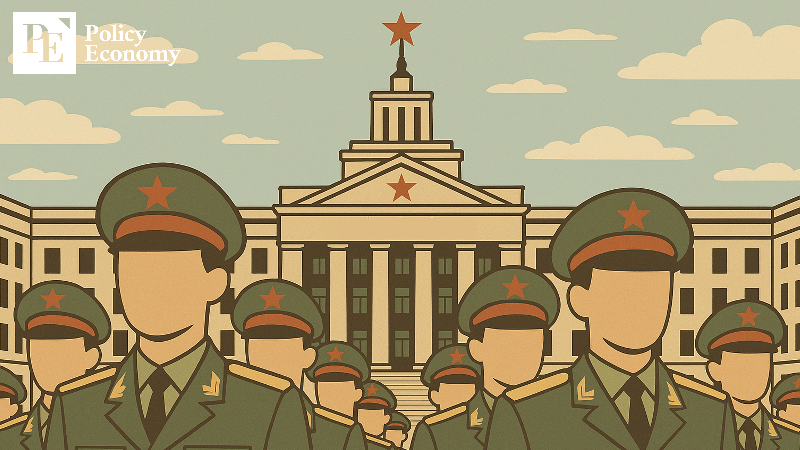
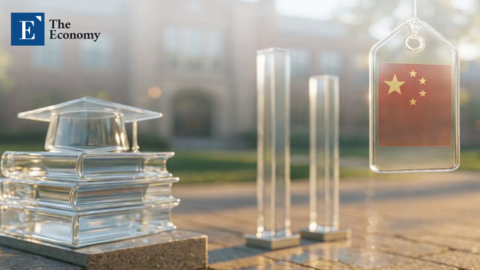
Perceptions of military academies among Chinese youth are rapidly shifting. As the job market freezes and unemployment soars, a once-avoided career as a soldier is emerging as an attractive option.

China’s Newly Established Military Academies Launched Amidst Surging Youth Interest

On June 23, the South China Morning Post (SCMP) reported that rising youth unemployment and various government incentives are driving growing interest among Chinese youth in joining the People's Liberation Army (PLA). According to the report, China’s Ministry of National Defense announced last month the establishment of three new military academies, which will begin recruiting high school graduates this summer. A related video garnered over 8 million views on the social media platform Weibo.

The newly established academies are: The Army Support College in Hefei, Anhui Province; The Information Support Force Engineering University in Wuhan, Hubei Province; and The Joint Logistics Support Force Engineering University in Chongqing

These institutions were formed by restructuring and consolidating divisions within existing military schools to modernize China’s military organization and talent cultivation system. Specifically:

- The Army Support College combines the former Armored Forces Academy and the Artillery and Air Defense Academy.

- The Information Support Force Engineering University merges the Information and Communication Department of the National University of Defense Technology with the Communication College of the Army Engineering University.

- The Joint Logistics Support Force Engineering University brings together the Army Logistics Academy, Military Transportation University, and its affiliated Automotive Academy.

The Information Support Force Engineering University will serve as the core training institution for the newly formed Information Support Force (ISF), established in April 2023. The school is expected to focus on cultivating talent with expertise in cutting-edge technologies such as drones, robotics, and artificial intelligence (AI). Meanwhile, the Joint Logistics Support Force at Engineering University aims to integrate logistics and transport systems across the country, enabling rapid joint operations and enhancing mobility. With logistics and support operations playing an increasingly critical role in modern warfare, the initiative seeks to develop both responsive structures and personnel capable of adapting to evolving battlefield conditions.

Until a few years ago, Military Academies Once Struggled with Enrollment

What’s particularly notable is that only a few years ago, military service was widely regarded as an undesirable career choice among Chinese youth. Since the Chinese Communist Party initiated military reforms in 2016, the number of student slots at China’s 27 military academies has steadily increased. From 2018 to 2021, the schools recruited an average of 13,000 students annually, with that number increasing by about 2,000 per year in both 2022 and 2023.

Yet despite the expanded capacity, applications remained sluggish. In 2023, even as the national college entrance exam (gaokao) drew a record-breaking 12.91 million test-takers, many military academies still failed to fill their quotas. Moreover, the gaokao scores of applicants to military institutions dropped significantly compared to previous years. For example, the National University of Defense Technology, often dubbed “the Tsinghua of the PLA," had a minimum admission score of only 514. Other institutions, such as the Army Service College and the Special Operations Academy, had minimum scores of 463 and below 400, respectively, on a scale where the maximum is 750.

This general avoidance of military academies stemmed largely from societal attitudes and concerns about compensation. Yang Taiyuan, a researcher at the Center for Integrated Science and Technology Strategy at Danjiang University, explained: “Although PLA salaries have risen in recent years, they are still low compared to incomes in more economically developed regions. This disparity creates a sense of disconnect between the standard of living at military academies and civilian life, making the military path less appealing to young people.”

He added that academic specialization also plays a role in shaping future prospects: “If a cadet is not in a science or technology-related field, they are more likely to be stationed in remote or border regions, where promotion opportunities are more limited.”
China’s Job Market on Shaky Ground

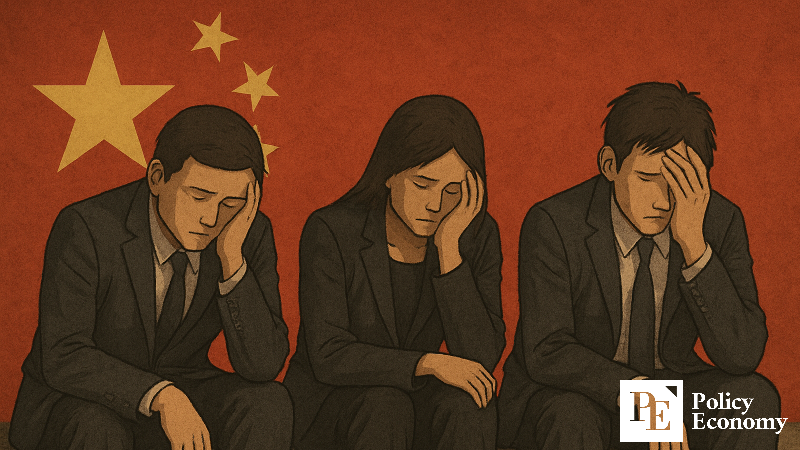
The abrupt shift in perception stems from growing instability in China’s job market. As attractive employment opportunities dwindle, the advantages of public-sector jobs, including military service, are becoming increasingly prominent. According to China’s National Bureau of Statistics (NBS), as of last month, the unemployment rate among urban youth aged 16 to 24 (excluding students) stood at 14.9%. This marked a 0.9 percentage point drop from the previous month’s 15.8%, yet remained higher than the 14.2% recorded a year earlier.

However, many analysts believe that China’s real youth unemployment rate significantly exceeds the official figures. Critics argue that the methodology used by the Chinese government to calculate youth unemployment is fundamentally flawed. Notably, in June 2023, when the youth unemployment rate hit a record 21.3%, the NBS suspended publication of the data for six months, citing a need to revise its methodology. Since the following January, the bureau has excluded students from the base population used to calculate the unemployment rate.

This approach contradicts international standards set by the International Labour Organization (ILO), which guide how labor statistics should be compiled. According to ILO guidelines, high school and university students who are seeking work or employed part-time are to be counted as part of the labor force, while only full-time students not actively seeking employment are excluded.

The criteria used to distinguish between employed and unemployed individuals have also come under scrutiny. Currently, the NBS classifies anyone aged 16 or older who worked for at least one hour during the past week for wages or business income as "employed." In effect, someone who worked just one hour of part-time labor in a week would be excluded from unemployment statistics. Critics argue this definition fails to capture the true earning conditions of workers and can lead to statistical distortion, where official economic data masks the underlying economic reality.

Picture

Member for

1 year 6 months
Real name
Stefan Schneider
Bio
Stefan Schneider brings a dynamic energy to The Economy’s tech desk. With a background in data science, he covers AI, blockchain, and emerging technologies with a skeptical yet open mind. His investigative pieces expose the reality behind tech hype, making him a must-read for business leaders navigating the digital landscape.

OTT랭킹

OTT랭킹은 방송·연예 전문지로 K-드라마, K-POP 및 기타 한국 문화 콘텐츠에 대한 글로벌 시장의 반응을 알리는데 초점을 맞춘 언론사입니다. 유럽 본사에서 운영되는 글로벌 OTT Ranking과는 K-콘텐츠 관련 기사를 공유합니다.

Trump: “We’ve Agreed on China’s Rare Earth Pre-Supply and Allowing Chinese Students in the U.S.”

Trump: “We’ve Agreed on China’s Rare Earth Pre-Supply and Allowing Chinese Students in the U.S.”

Picture

Member for

1 year 6 months
Real name
Stefan Schneider
Bio
Stefan Schneider brings a dynamic energy to The Economy’s tech desk. With a background in data science, he covers AI, blockchain, and emerging technologies with a skeptical yet open mind. His investigative pieces expose the reality behind tech hype, making him a must-read for business leaders navigating the digital landscape.

Modified

U.S. and China Reach Agreement on Key Issues
Did Rare Earth Export Disruptions Drive the Deal?
Attracting Chinese Students: Balancing Risk and Reward

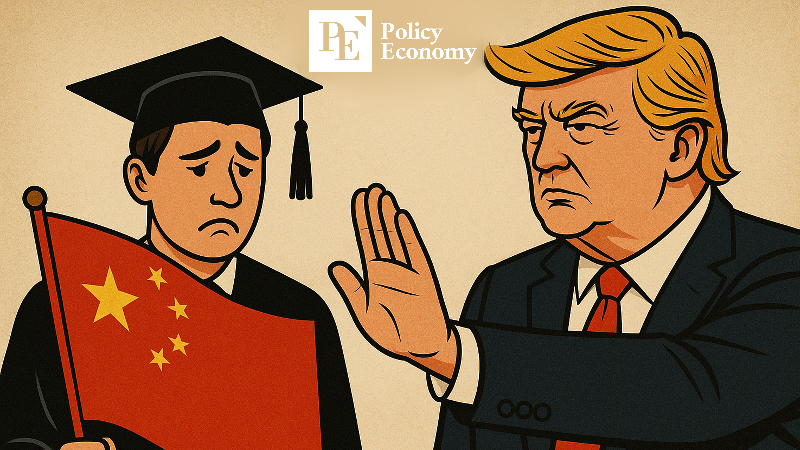
U.S. President Donald Trump announced that an agreement has been reached regarding China’s supply of rare earth elements to the United States and the admission of Chinese students to U.S. universities. Following last month’s Geneva talks—after which both sides exchanged retaliatory measures and continued a precarious diplomatic balancing act—the two countries have now managed to carve out a potential pause through a recent economic dialogue.

Signs of Easing Tensions Between U.S. and China

On June 11 (local time), U.S. President Donald Trump posted on his social media platform, Truth Social: “We’ve concluded negotiations with China, pending final approval from President Xi and myself. All rare earth elements and permanent magnets we need will be pre-supplied by China.” He added, “This includes everything we’ve agreed to supply China in return, including allowing Chinese students to study at American universities.”

This statement suggests that during the second day of the U.S.-China Economic Dialogue held in London the previous day, the two sides reached a tentative agreement. It appears to include lifting China’s export restrictions on rare earths to the U.S.—a key American demand—and reversing the U.S. policy of canceling student visas for Chinese nationals—Beijing’s priority issue.

However, Trump made no mention of whether any consensus had been reached regarding China’s request to ease U.S. export controls on advanced semiconductors, one of the more contentious and strategically sensitive issues in the ongoing bilateral rivalry. He did, however, cite specific tariff numbers. “We’ll each impose a 55% tariff. China will receive 10%,”
he wrote—suggesting an upward revision of the U.S. tariff rate on Chinese goods by 25 percentage points, from the previously agreed 30%. Last month, the two sides had agreed during a high-level meeting in Geneva to lower U.S. tariffs on Chinese imports to 30% and China’s tariffs on U.S. goods to 10%.

The Power of China’s Rare Earth Export Restrictions

Rare earths emerged as a central topic in the talks due to the mounting disruption in U.S. domestic industries caused by China’s export curbs. In response to Trump’s earlier tariff hikes, Beijing restricted rare earth exports to the U.S. in April, including key rare earth permanent magnets used in high-tech manufacturing. Even after the Geneva talks, China maintained these controls.

The shortage of rare earths is severely damaging to critical industries, including automotive, robotics, and defense. Permanent magnets made from rare earths are essential components in hybrid and electric vehicle motors, catalytic converters, seat adjusters, and more. A sustained supply disruption could paralyze production across multiple sectors. The Alliance for Automotive Innovation (AAI), which represents the U.S. auto industry, reportedly sent a confidential letter to the U.S. government last month warning of major damage due to China’s restrictions.

In the letter, AAI stated: “Without reliable access to rare earth magnets, suppliers will be unable to manufacture essential components including automatic transmissions, throttle bodies, alternators, various motors, sensors, seat belts, speakers, lighting systems, power steering, and cameras.” The group warned that in extreme cases, companies might face production cuts or even assembly line shutdowns. AAI includes major global automakers such as General Motors, Ford, Stellantis, BMW, Mercedes-Benz, Volkswagen, Toyota, Hyundai, and Kia.

Why the U.S. Can't Push Chinese Students Out

One of the key issues in recent U.S.-China negotiations has been the revocation of U.S. visas for Chinese students, which has drawn attention following a series of hardline statements from the American government. On May 28, U.S. Secretary of State Marco Rubio issued a statement titled “The New Visa Policy Will Prioritize America Over China”, asserting that under President Trump’s leadership, the Department of Homeland Security would actively cancel visas for Chinese students—especially those linked to the Chinese Communist Party or engaged in sensitive fields of research. He further announced plans to tighten screening standards for all future visa applications from China and Hong Kong, effectively suggesting that Chinese students in the U.S. are being viewed as potential spies.

Some observers consider this precaution reasonable. Incidents involving Chinese students and researchers have repeatedly sparked controversy in the U.S. A recent case involved two Chinese nationals attempting to smuggle pathogenic fungal material into the country. On June 4, the FBI indicted a Chinese male in his 30s and his girlfriend, a researcher at the University of Michigan, for illegally importing a toxic fungus capable of damaging crops and harming human health.

According to the FBI, the male suspect was caught at Detroit Airport in July last year with multiple plastic bags, wrapped in tissue, containing the fungal substance hidden in his luggage. Initially denying knowledge of the contents, he later admitted it was intended for use in a university lab.

Subsequent analysis confirmed that the substance was Fusarium graminearum, a fungus known to cause head blight, a devastating disease in wheat, barley, corn, and rice. The U.S. Attorney's Office for Eastern Michigan noted that the fungus is classified as a potential agricultural bioterrorism agent, and the suspects had neither applied for nor received import authorization from the U.S. Department of Agriculture (USDA).

Despite such risks, the U.S. appears reluctant to completely shut out Chinese students, primarily due to their economic significance. According to a 2023–2024 report by the National Association of Foreign Student Advisers (NAFSA), international students contributed USD 43 billion to the U.S. economy through tuition, housing, and living expenses. Their presence also supported 378,175 American jobs.

As of the 2023–2024 academic year, the number of international students in the U.S. under F and M visas reached 1,126,690. Among them, Chinese students made up about 25%, underscoring their dominant share. In short, excluding Chinese students would leave a gaping hole in the U.S. higher education system and economy. Their contributions—both financially and intellectually—make it difficult for the U.S. to carry out a wholesale expulsion, despite rising geopolitical and security concerns.

Picture

Member for

1 year 6 months
Real name
Stefan Schneider
Bio
Stefan Schneider brings a dynamic energy to The Economy’s tech desk. With a background in data science, he covers AI, blockchain, and emerging technologies with a skeptical yet open mind. His investigative pieces expose the reality behind tech hype, making him a must-read for business leaders navigating the digital landscape.

Japanese Government and Universities Launch Talent Recruitment Drive Amid Scientist Exodus Triggered by Trump

Japanese Government and Universities Launch Talent Recruitment Drive Amid Scientist Exodus Triggered by Trump

Picture

Member for

1 year 6 months
Real name
Nathan O’Leary
Bio
Nathan O’Leary is the backbone of The Economy’s editorial team, bringing a wealth of experience in financial and business journalism. A former Wall Street analyst turned investigative reporter, Nathan has a knack for breaking down complex economic trends into compelling narratives. With his meticulous eye for detail and relentless pursuit of accuracy, he ensures the publication maintains its credibility in an era of misinformation.

Modified

Japan Expands Financial Support for Foreign Talent Recruitment Using ¥10 Trillion University Fund
Tohoku University and Other International Excellent Research Universities to Receive Increased Support
France, UK, and Spain Launch Independent Talent Recruitment Strategies Across Europe
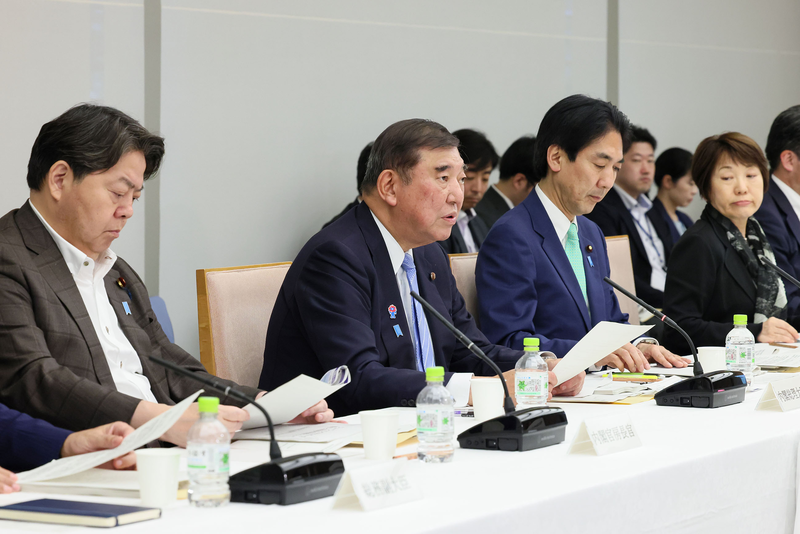
On June 4, Japanese Prime Minister Shigeru Ishiba speaks at the Comprehensive Science, Technology, and Innovation Council about plans to strengthen Japan’s international brain circulation strategy / Photo: Prime Minister’s Office of Japan

The global scientific community is undergoing a tectonic shift. Since Donald Trump’s return to the White House, sweeping policy changes in the United States have triggered unease within academic and research institutions. Restrictions on foreign students, skepticism toward climate science, and reduced support for international collaboration have combined to erode America’s long-standing status as a safe haven for scientific talent. In response, countries across the globe are moving decisively to capture the brainpower that is now, perhaps for the first time in decades, reconsidering its American future. Leading this charge is Japan, which has launched a multi-pronged, government-backed campaign to attract top researchers and international students who are disillusioned by U.S. policies. Alongside Japan, European countries and Canada are also rolling out bold national strategies to welcome the emerging wave of scientific migrants.

Japan Strengthens 'International Brain Circulation' Strategy

On June 4, Japanese Prime Minister Shigeru Ishiba chaired the Comprehensive Science, Technology, and Innovation Conference and made clear that Japan sees opportunity in the disruption. Citing widespread concerns about the U.S. research climate under the Trump administration, Ishiba stated that Japan must boost its own scientific capabilities by welcoming foreign researchers through a reinvigorated “international brain circulation” strategy. This vision seeks to go beyond merely avoiding brain drain—it is an active two-way model: sending Japanese researchers abroad while simultaneously attracting world-class talent into Japan to deepen its scientific networks and global research output.

Until now, Japan has been cautious in recruiting American researchers, largely out of respect for its diplomatic ties with the United States. Instead, it has historically focused on attracting talent from Asia—particularly China, South Korea, Southeast Asia, and India—as well as from Europe. Most of Japan’s foreign researchers today hail from these regions, and European representation has been steadily growing. However, Ishiba’s directive marks a clear pivot. During the meeting, he instructed ministers to urgently draft concrete strategies for recruiting global talent, clearly signaling a departure from Japan’s previously restrained approach.

Among the initiatives under discussion is a move to narrow the considerable pay gap between Japanese and American academics. Professors at prestigious U.S. institutions typically earn over USD 207,030 annually, nearly three times the average USD 69,000–83,000 salary for Japanese professors. To bridge this divide, Ishiba has directed officials to mobilize the 10 trillion yen university endowment fund—a national strategic fund created to elevate Japanese universities to world-class status. The fund is now seen as a cornerstone in efforts to enhance researcher compensation, secure resources, and modernize infrastructure to make Japan more competitive in the global academic marketplace.

Universities Actively Court U.S. Researchers and Students

Tohoku University stands at the forefront of this national pivot. This year, it received USD 106 million under the “International Excellent Research University” program funded by the national endowment and is now setting its sights on U.S.-based faculty. The university has reportedly reached out to approximately 180 researchers from elite American institutions, including Stanford University, and has begun active on-the-ground recruitment. Tohoku plans to hire several of these scholars by March 2026 and is seeking additional government funding to expand its recruitment capacity.

Other universities are also mobilizing swiftly. Osaka University has become the first Japanese institution to publicly declare a numerical goal: it aims to bring in 100 U.S.-based researchers and has secured a USD 4.14 million yen budget to support the endeavor. The university is already overhauling its internal systems to accommodate the incoming talent. It has also launched a formal hiring process to recruit young medical and life sciences researchers as postdoctoral fellows. Crucially, Osaka is providing tailored administrative assistance to ensure smooth entry and settlement for these scholars.

At the same time, the Japanese government is working to attract international students who have been displaced by U.S. visa and enrollment restrictions. On May 27, the Ministry of Education, Culture, Sports, Science and Technology issued a nationwide directive to universities, urging them to prepare for an influx of students from U.S. institutions like Harvard University who are reconsidering their academic futures. The University of Tokyo was the first to respond officially. President Teruo Fujii underscored the urgency of Japan’s role in preserving global academic continuity, stating, “The academic world is working to protect its accumulated research achievements. Japan must determine how it can contribute. A systematic and strategic approach is essential.”

European Union (EU) “Choose Europe” Campaign / Source: European Commission

Europe and Canada Join the Global Talent Race

Japan’s push is part of a broader, international movement. In May, the European Union launched the “Choose Europe” campaign, specifically targeting scientists disillusioned by the situation in the U.S. As part of the campaign, the EU introduced a 500 million euro support package for the 2025–2027 period aimed at creating a favorable research ecosystem. The initiative includes generous salaries, long-term contracts, increased research funding, and simplified immigration and residency processes—a comprehensive effort to make Europe a prime destination for scientific talent.

National-level initiatives are complementing the EU’s broader push. France unveiled the “Choose France for Science” platform and is actively courting American scientists. During a visit to the European Commission, French President Emmanuel Macron proclaimed that “Europe will be a refuge for scientists,” adding, “Science has no passport or race.” In parallel, the United Kingdom announced a USD 67.5 million investment to launch an immigration program for foreign researchers. Spain, too, is accelerating its efforts, having allocated an additional USD 51.4 million to bring U.S. scientists into its academic institutions.

Canada, sharing both a border and linguistic ties with the U.S., has been particularly agile in leveraging the American talent outflow. Since early 2025, there has been a noticeable uptick in the number of American scientists, professors, and researchers relocating to Canada. Several faculty members from Yale University have reportedly transferred to the University of Toronto, and more are said to be considering similar moves. Canadian provinces are taking initiative as well. Quebec has launched a recruitment campaign aimed at researchers disillusioned by the Trump administration’s climate change skepticism. British Columbia and Manitoba have introduced customized policies to attract U.S. medical professionals, with some offering fast-tracked immigration services and generous research grants.

As the world recalibrates in response to shifting U.S. policies, the global competition for minds is intensifying. For countries like Japan, the exodus of American-based scientific talent is not just a challenge—it is a strategic opportunity. With bold investments, diplomatic nuance, and long-term vision, Japan and its international partners are redrawing the map of global research leadership. The coming years may well reveal that the greatest scientific discoveries of the post-Trump era will not be made in America—but by those America let go.

Picture

Member for

1 year 6 months
Real name
Nathan O’Leary
Bio
Nathan O’Leary is the backbone of The Economy’s editorial team, bringing a wealth of experience in financial and business journalism. A former Wall Street analyst turned investigative reporter, Nathan has a knack for breaking down complex economic trends into compelling narratives. With his meticulous eye for detail and relentless pursuit of accuracy, he ensures the publication maintains its credibility in an era of misinformation.

Chinese Researcher Caught Smuggling Toxic Fungus into U.S.: “Spy Activity Rampant in University Circles”

Chinese Researcher Caught Smuggling Toxic Fungus into U.S.: “Spy Activity Rampant in University Circles”

Picture

Member for

1 year 6 months
Real name
Anne-Marie Nicholson
Bio
Anne-Marie Nicholson is a fearless reporter covering international markets and global economic shifts. With a background in international relations, she provides a nuanced perspective on trade policies, foreign investments, and macroeconomic developments. Quick-witted and always on the move, she delivers hard-hitting stories that connect the dots in an ever-changing global economy.

Modified

Chinese Researcher Couple Indicted for Smuggling Fungus into U.S.
Seized Bacteria Deemed ‘Potential Agricultural Bioterror Weapon’
U.S.-China Tensions over Tech and Information Leaks Escalate into National Security Issue

Two Chinese researchers working in a U.S. university laboratory have been indicted for attempting to smuggle toxic bacteria into the United States. This incident has raised growing concerns in diplomatic circles that the ripple effects of the U.S.-China strategic rivalry are now extending into academic research settings. Observers warn that the conflict between the two nations is escalating beyond trade disputes and technological supremacy, posing direct threats to national security and the everyday lives of citizens.

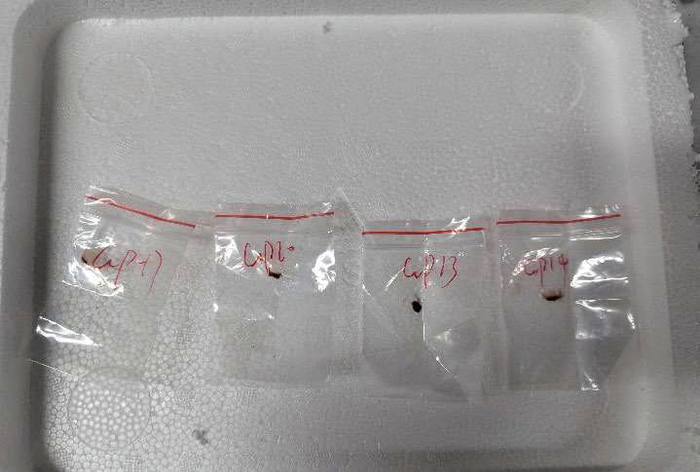
Sample of Fusarium graminearum Pathogen Chinese Researchers Attempted to Smuggle into the U.S. / Photo: Detroit Prosecutor’s Office

Attempt to Smuggle Bioterror Fungus onto U.S. Soil

According to The Washington Post on the 8th (local time), the U.S. Department of Justice announced on the 3rd that Yuan Qingjian (33), a postdoctoral researcher at the University of Michigan's Microbial Interactions Lab, and Liu Junyong (34), a researcher at Zhejiang University in China, were indicted for smuggling and conspiracy involving a toxic fungal strain. The two, who are reportedly in a relationship, were caught at Detroit Airport last July trying to bring the fungus into the U.S. by hiding samples in their luggage after arriving from China.

The couple reportedly told customs officials they brought the samples for research and replication of various microbial strains in their university lab. However, the University of Michigan stated it had not granted any permission for the import or research of the fungus in question.

The fungus they attempted to bring in—Fusarium graminearum—is far from harmless. U.S. authorities classify it as a potential agricultural bioterror agent. According to Fox News, FBI agent Edward Nie testified in court that the mycotoxins produced by the fungus could cause severe vomiting and liver damage if introduced into the human body.

The scientific journal Science also highlighted the risks, noting that the fungus can cause head blight in key crops such as wheat, barley, corn, oats, and even rice. Infected crops lose commercial value and, in severe cases, the disease can drastically reduce yields—causing billions of dollars in economic losses annually.

U.S. Prosecutors Highlight Ties to Chinese Communist Party

The FBI has pointed to this case as further evidence that the Chinese Communist Party (CCP) is embedding operatives and researchers in U.S. institutions to target food security. Investigators reportedly found on the suspects’ phones a personal research evaluation report for a Chinese university and a signed loyalty pledge to "adhere to the principles of the Chinese Communist Party."

According to U.S. public broadcaster Radio Free Asia, the China Scholarship Council (CSC) provides funding to around 15% of Chinese students studying in the U.S. The report also noted that recipients of such scholarships are often required to sign agreements pledging to submit regular updates to the Chinese government before leaving the country.

This case is part of a growing trend of espionage involving Chinese nationals in U.S. academic institutions. In 2019, Harvard Medical School researcher Zaosong Zheng was caught trying to smuggle 21 biological samples related to cancer research back to China by hiding them in his socks at Boston Logan Airport. In 2020, former Tianjin University professor Hao Zhang was convicted of attempting to steal proprietary semiconductor technology from U.S. companies Avago and Skyworks.

In 2021, Xu Yanjun, an intelligence officer from China’s Ministry of State Security (MSS), was arrested for trying to steal aerospace technology from major U.S. companies including GE Aviation. From December 2013 until his capture, Xu reportedly tried to recruit industry experts under the guise of academic exchanges—inviting them to China under false pretenses while working with front companies and fake universities. His ultimate goal was to obtain classified information related to GE’s proprietary composite aircraft engine fan module—technology believed to be unmatched globally.

2020: U.S. Sent Home All CSC-Funded Chinese Visiting Scholars

Experts are drawing links between this recent smuggling case and broader efforts by the Trump administration’s second-term team to cancel the visas of Chinese nationals tied to the CCP or engaged in sensitive research. Increasingly, U.S. politicians and media outlets have voiced concerns about Chinese students potentially engaging in espionage. In response, the U.S. government has moved to tighten visa screening and management.

The Trump administration had already launched the China Initiative in 2018 during its first term, aimed at identifying Chinese spies and preventing intellectual property theft. As part of the initiative, in 2020 the University of North Texas ordered all Chinese visiting researchers funded by the CSC to leave. The CSC, a division of China’s Ministry of Education, supports international study and exchanges for Chinese students. Many of these researchers held J-1 exchange visas.

Investigations conducted at the time revealed that many researchers involved in CCP-led talent recruitment programs had received Chinese funding and were later indicted for technology theft. In response, the Trump administration also stepped up oversight of U.S. federally funded research programs—such as those supported by the National Institutes of Health (NIH)—to ensure foreign funding sources were disclosed.

Picture

Member for

1 year 6 months
Real name
Anne-Marie Nicholson
Bio
Anne-Marie Nicholson is a fearless reporter covering international markets and global economic shifts. With a background in international relations, she provides a nuanced perspective on trade policies, foreign investments, and macroeconomic developments. Quick-witted and always on the move, she delivers hard-hitting stories that connect the dots in an ever-changing global economy.