[Diagnosing the Breakdown of Universities] Palantir’s “Post-University” experiment poses a stark question: in the age of AI, what is higher education actually for?

With a decade of experience in education journalism, Lauren Robinson leads The EduTimes with a sharp editorial eye and a passion for academic integrity. She specializes in higher education policy, admissions trends, and the evolving landscape of online learning. A firm believer in the power of data-driven reporting, she ensures that every story published is both insightful and impactful.
Input
Modified
A College Degree No Longer a Guaranteed Ticket to Success
Palantir High School Internship Prompts Student to Forgo Brown University Admission
Eroding Competitiveness and Inefficiency Drive 10% of Colleges to Shut Down in Two Years

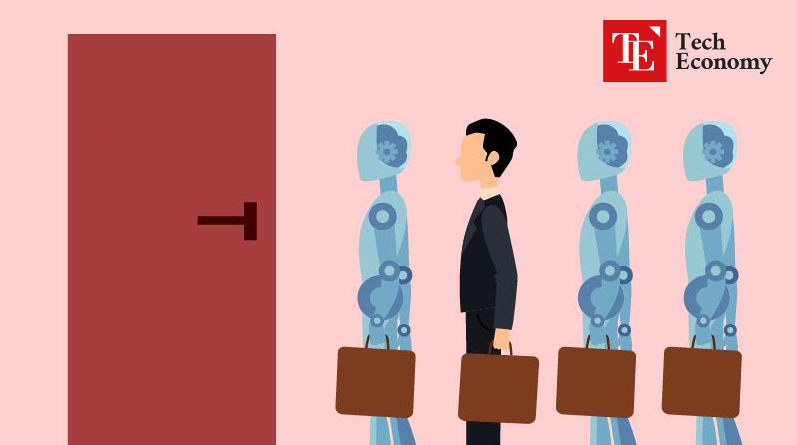
As artificial intelligence (AI) rapidly replaces jobs among young Americans, doubts are deepening about the competitiveness of university education. Despite exorbitant tuition fees, college degrees no longer guarantee employment, and the knowledge acquired on campus is increasingly irrelevant in the workplace—prompting growing criticism that higher education has lost its practical value.
Against this backdrop, U.S.-based AI data analytics firm Palantir Technologies has launched an experiment in “post-university” hiring by introducing an internship program exclusively for high school graduates. The initiative aims to identify and secure top talent based on merit rather than academic credentials, with plans to offer full-time positions to high performers—without requiring a college degree.
Prioritizing Skill Over Credentials: A Move to Capture Practice-Ready Talent
According to the Wall Street Journal (WSJ) and other U.S. media outlets on November 4 (local time), Palantir has begun operating a new internship program this fall called the “Meritocracy Fellowship,” targeting 22 recent high school graduates. Participants are hired in a short-term role between intern and entry-level employee and receive a monthly salary of $5,400. Over a four-month period, they undergo training, mentorship, and hands-on project work. Those who demonstrate strong performance will be converted to full-time employees.
The program reportedly attracted more than 500 applicants, including one who turned down admission to the Ivy League’s Brown University. Matteo Zanini, who had been awarded a full scholarship from the U.S. Department of Defense to attend Brown, declined enrollment after the university refused to defer his admission. “Everyone—friends, teachers, and college counselors—told me not to do this,” he said. “My parents think I’ll probably apply to college next year after the fellowship, but if I get a full-time offer, that’s unlikely.”
The fellowship began with a four-week seminar series featuring over 20 speakers covering diverse topics—from the American frontier era and social movements to leadership studies on figures such as Abraham Lincoln and Winston Churchill. After the seminars, participants were immediately assigned to live project teams handling real client work. A program coordinator explained, “We wanted the fellows to experience what it means to create something of their own and to make decisions independently.”
Elite Universities Draw What’s Left of Student Demand
Palantir’s experiment stems from growing distrust of higher education. The company, with roughly 4,000 employees and a market capitalization of $475.3 billion, is valued at nearly three times that of defense giant Lockheed Martin. Given that talent is Palantir’s primary competitive asset, the belief that real-world ability outweighs a college diploma has taken deep root within the company.
In its internship announcement last April, Palantir openly criticized American universities, stating: “College admissions standards are opaque and flawed, making it difficult to maintain excellence. Don’t go into debt studying at institutions where meritocracy has disappeared—earn a Palantir degree instead.”
According to The New York Times (NYT), the program reflects the conviction of CEO Alex Karp, who has long argued that “colleges are no longer essential to producing good workers.” Karp, who studied philosophy at Harvard and earned a law degree from Stanford, has said that “today’s students all sound the same.” Co-founder and Palantir board chairman Peter Thiel has similarly criticized higher education’s inefficiency and, since 2010, has funded the Thiel Fellowship, which grants startup capital to young people under 22 who choose entrepreneurship over college.
This growing criticism of higher education’s inefficiency and declining competitiveness has translated into a broader collapse of the university market. According to data from the State Higher Education Executive Officers Association (SHEEO), 319 two-year or four-year colleges across the United States have shut down since 2008—a roughly 10% decline from 2022, when 3,542 institutions were still in operation. Nonetheless, demand has become increasingly concentrated in elite universities, which are perceived to offer better employment prospects. WSJ data show that among 748 four-year state universities in 50 states, flagship campuses saw average enrollment growth of 9% from 2015 to 2022, while other public universities experienced a 2% decline.
AI-Driven Labor Shifts Deepen Higher Education’s Crisis
The ongoing transformation of the labor market driven by AI poses yet another existential threat to universities, as recent college graduates face mounting unemployment. The U.S. jobless rate reached 4.3% in August, the highest in four years. Compared with the post-pandemic low of 3.5% recorded in July 2023, the deterioration in hiring is stark—especially among new graduates and young workers. As of March 2025, unemployment among recent graduates aged 22 to 27 stood at 5.8%, up from 4.6% a year earlier. By contrast, the national average unemployment rate at that time was 4.2%, highlighting the growing disparity.
Experts attribute this trend not to economic recession but to the accelerated adoption of AI technologies. A study published by Stanford University researchers in August found that AI has had a disproportionately negative impact on job availability for workers aged 22 to 25. Highly structured tasks in accounting, legal work, document processing, and customer service are being rapidly automated, leading firms to halt entry-level hiring altogether.
The software development sector has been hit particularly hard. Projects that once required dozens of engineers can now be executed largely through AI tools, resulting in a sharp decline in junior hiring across the IT industry. Even within data science—the core of AI technology—introductory analytical and data-cleaning tasks are now automated, further shrinking entry-level opportunities.
For America’s Generation Z, the focus has shifted to survival itself. Job displacement caused by AI is no longer a future concern—it is today’s reality. The U.S. political establishment is taking notice. President Donald Trump has proposed redirecting federal support away from elite universities and toward technical training programs to prepare workers for the AI era. His administration’s plan emphasizes cultivating skilled blue-collar professionals such as electricians and plumbers.
However, experts warn that traditional trades alone will not meet the demands of the new economy. The shortage of workers with advanced technical skills—such as robotics maintenance, semiconductor equipment servicing, and next-generation battery production—poses a serious risk. They caution that a mere pivot to blue-collar training will be insufficient to address the profound structural changes of the AI age.
With a decade of experience in education journalism, Lauren Robinson leads The EduTimes with a sharp editorial eye and a passion for academic integrity. She specializes in higher education policy, admissions trends, and the evolving landscape of online learning. A firm believer in the power of data-driven reporting, she ensures that every story published is both insightful and impactful.
Similar Post