Australia Rolls Out World-First Under-16 Social Media Ban, Legal Challenges and Policy Spillovers Follow

With a decade of experience in education journalism, Lauren Robinson leads The EduTimes with a sharp editorial eye and a passion for academic integrity. She specializes in higher education policy, admissions trends, and the evolving landscape of online learning. A firm believer in the power of data-driven reporting, she ensures that every story published is both insightful and impactful.
Input
Modified
Reddit petitions the High Court, framing the ban as a constraint on political communication
Evidence debates sharpen, with studies examining links between heavy use and cognitive outcomes
Policy replication accelerates: Malaysia signals a 2026 move; the UK reviews the model
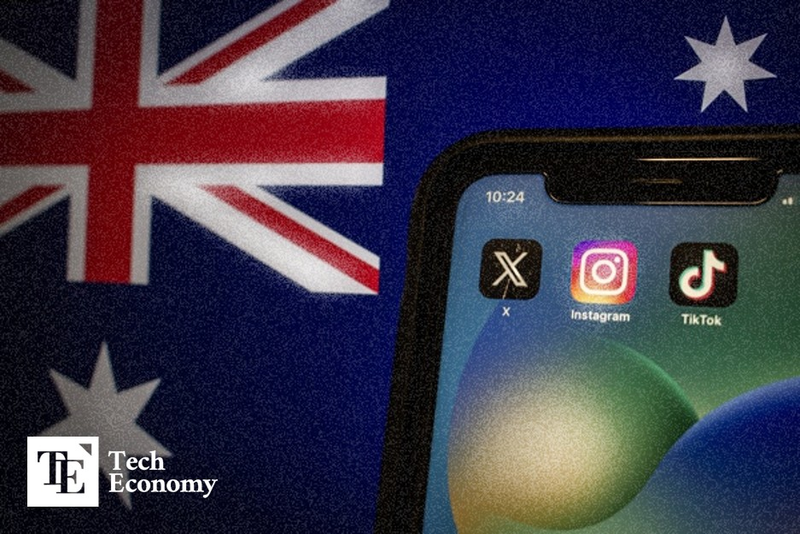
As Australia becomes the first country in the world to legally restrict teenagers’ use of social media, confusion is spreading, with global platform Reddit filing a lawsuit on the grounds that the policy infringes freedom of expression. Within Australia, a broad consensus has formed around the intent—protecting adolescents’ cognitive development and mental health—but questions are rising over effectiveness, given that content can still be viewed without logging in and access can be circumvented. As major countries such as Malaysia and the UK move to adopt or examine similar measures, some warn that if such regulation spreads globally, it could be weaponized as a tool of censorship.
Mandatory Deactivation of Accounts Under 16
According to Reuters on the 11th (local time), Reddit recently filed a suit in Australia’s High Court, arguing that the “ban on social media access for users under 16,” which took effect on the 10th, and the decision to classify the company as subject to the law, are unjustified. The defendants named in the filing reportedly include the Australian federal government and Communications Minister Anika Wells. In a statement issued alongside the complaint, Reddit said, “This measure goes beyond simple age verification and raises serious concerns about the privacy and political freedom of expression of all internet users,” adding that it had “filed suit to seek judicial review of the legislation.”
The Australian government introduced the world’s first legal age limit on social media use the previous day. The legislation took effect after passing parliament in November last year and undergoing roughly a year of preparation. Under the rules, 10 platforms are initially designated as subject to the measures—Facebook, Instagram, Threads, YouTube, TikTok, X (formerly Twitter), Snapchat, Reddit, Twitch, and Kick—with requirements to delete and deactivate accounts for users under 16 and to conduct age verification. Violations carry fines of up to $33.0 million. The number of social media users under 16 in Australia currently covered by the regulation is estimated at around 1 million.
However, viewing content while not logged in remains possible. On this point, Australia’s online safety regulator eSafety, which is responsible for implementing and overseeing the measure, explained that “strictly speaking, this is not a complete access blockade but closer to a temporary suspension of account usage.” It added that “young people are more likely than adults to face excessive pressure and risks when logged in,” and that “these risks stem from the design features of social media platforms, which are built to maximize time spent by triggering anxiety and negative emotions or by making it easy to encounter content that can shape a user’s psychology.”
Voices questioning the policy’s real-world effectiveness are also growing. That is because cases are increasing in which users bypass age checks or access platforms through virtual private networks (VPNs). In fact, just ahead of the law’s rollout, searches in Australia related to VPNs reportedly surged to their highest level in a decade. Prime Minister Anthony Albanese, who led the push for the bill’s passage, stressed that “we can’t shut down more than a million accounts overnight, but the change has already begun,” adding, “I hope we can create an environment where children can fully enjoy their childhood, and where parents no longer have to worry about what their kids are seeing online.”
Split Views on the Impact of Social Media Restrictions
Opinion remains sharply divided over the impact of the regulation. Communications Minister Anika Wells, in an interview with the BBC, said, “With a single law, we can protect Generation Alpha (those born from 2010 onward) from being sucked into hell by the predatory algorithms Big Tech has hidden away.” Scott Griffiths, a professor of psychology at the University of Melbourne, also said, “Seeing such a strong legislative step being implemented, I expect the major social media companies will finally take meaningful action to better protect more young people’s health and wellbeing,” adding that “this regulation is worth trying.”
Research findings suggesting that adolescents’ social media use can negatively affect cognitive function are also lending weight to such arguments. According to a study by the Karolinska Institute and Oregon Health & Science University published in a U.S. pediatric academic journal, researchers followed more than 8,300 children from age 10 for four years and found that social media use was associated with increases in inattentive symptoms such as reduced concentration and attention-deficit/hyperactivity disorder (ADHD). The researchers said, “Social media captures attention through constant interruptions such as messages and notifications, and if this repetition accumulates over months and years, it can have long-term effects on concentration.”
On the other hand, concerns are widespread that the restrictions themselves could trigger additional problems. Critics argue that hardline measures imposed without sufficiently reflecting adolescents’ views could instead heighten anxiety and psychological stress. In particular, given the role social media has played in teens’ relationship-building and identity formation, sudden limits on access could provoke a sense of loss. There are also concerns that efforts to circumvent blocks could push young users into even riskier online environments. Accordingly, advice is emerging that the role of parents and guardians will become even more important after social media bans take effect.
Some also note that while the downsides of social media use in adolescence have been raised consistently, causal relationships have not been clearly established, calling into question whether sweeping access restrictions are justified. There is also substantial pushback against the idea that simply blocking social media will reduce harm. Services that strengthen social features—such as dating websites and gaming platforms—can still expose minors to inappropriate contact or harmful content. Recently, as conversational services using artificial intelligence (AI) chatbots expand, concerns are also being raised that young people could be exposed to new forms of risk, including sexual grooming, excessive dependence, and emotional exploitation.
Censorship Concerns as Social Media Curbs Show Signs of Spreading
Despite these concerns and controversies, the movement to legally restrict adolescents’ access to social media is already spreading across major countries. Malaysia enacted an Online Safety Act last October adopting the same prohibition standard as Australia and plans to implement it next year, while New Zealand and Denmark are also preparing legislation to block minors’ access to social media. The European Union (EU) passed a non-binding parliamentary resolution last month calling for a “ban on social media for under-16s,” and the UK government is likewise closely examining Australia’s age-limit model.
Similar debate is also gaining traction in the United States, often described as the “birthplace of social media.” While the measures are not an outright blanket ban like Australia’s, some states have passed laws restricting teenagers’ use of social media or online services. Nebraska adopted a bill requiring platforms to verify age and obtain parental consent before minors can create accounts, with implementation slated for July 2026. Utah, Texas, and Louisiana introduced laws requiring app store operators to verify user age and obtain parental consent for new downloads and updates.
Even so, if these measures spread worldwide, the risk cannot be ruled out that—depending on each country’s political and social context—they could be misused as instruments of censorship. In particular, concerns are heightened in developing Asian countries, where social media has functioned as a core arena enabling democracy to operate—serving as a space for whistleblowing on corruption, criticizing those in power, and organizing civic movements. For instance, in September in Nepal, as public anger over economic inequality spread rapidly via social media, the government imposed a blanket block on access to major platforms such as Facebook and Instagram, which instead intensified public outrage and escalated into mass protests. Around the same period, anti-government demonstrations demanding an end to corruption and a narrowing of the rich-poor gap also continued in Indonesia, Bangladesh, and Sri Lanka, with social media serving as the conduit.
With a decade of experience in education journalism, Lauren Robinson leads The EduTimes with a sharp editorial eye and a passion for academic integrity. She specializes in higher education policy, admissions trends, and the evolving landscape of online learning. A firm believer in the power of data-driven reporting, she ensures that every story published is both insightful and impactful.
Similar Post