South Korea’s Foreign Workforce Surpasses 1.1 Million as Composition Shifts Tighten Policy and Cost Scrutiny

With a decade of experience in education journalism, Lauren Robinson leads The EduTimes with a sharp editorial eye and a passion for academic integrity. She specializes in higher education policy, admissions trends, and the evolving landscape of online learning. A firm believer in the power of data-driven reporting, she ensures that every story published is both insightful and impactful.
Input
Modified
Asian nationals account for most of the incremental hiring
Jobs cluster in SMEs and provincial manufacturing hubs
Wage costs and labor-risk controls move to the center of management
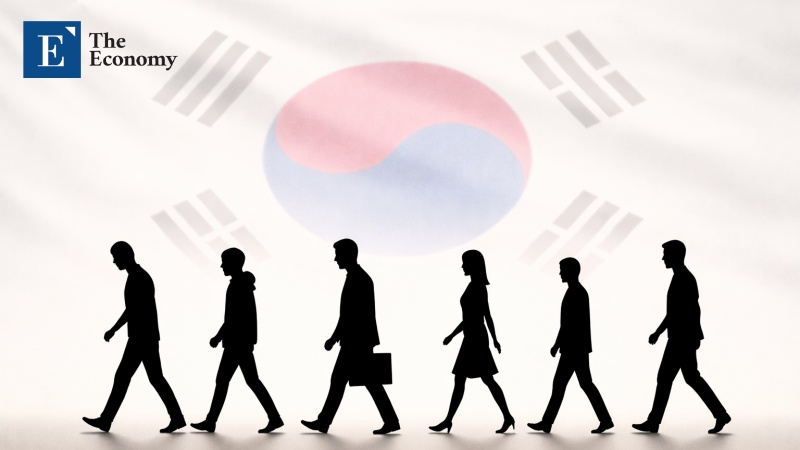
The number of foreign nationals economically active in South Korea has exceeded 1.1 million, marking a record high. Beyond the increase in headcount, the trend highlights a clear shift in composition, led by international students and workers from Asian countries. A large share of foreign workers is concentrated in small and midsize manufacturing firms and in regional industrial sites, with similar patterns evident in wage levels and working-hour distributions. As a result, interest is growing in how corporate workforce strategies and labor system changes are shaping employment dynamics.
Labor inflows reflected in nationality and visa composition
According to the “2025 Survey on Immigrant Residence and Employment” released on May 18 by the Korea National Data Agency, the number of foreign residents living in South Korea stood at 1.692 million as of May, up 132,000, or 8.4%, from a year earlier. The employment rate among foreign residents rose 0.8 percentage points year on year to 65.5%. As a result, the number of foreign workers employed in South Korea reached 1.109 million, the highest level since statistics were first compiled in 2012. This represents a 9.4% increase from a year earlier and accounts for 3.8% of total employment in South Korea, which stood at 29.16 million.
International students and non-professional workers drove the increase. The number of employed foreign students in South Korea reached 68,000 in May, up 23,000 from a year earlier, a jump of 71.8%. Over the same period, the number of non-professional foreign workers under the Employment Permit System (E-9) rose by 18,000 to 321,000. The agency said the expansion reflects efforts by local governments and universities to attract overseas students, alongside steady growth in non-professional employment under the permit system.
By nationality, ethnic Koreans from China accounted for the largest group of foreign workers at 341,000, followed by Vietnamese nationals at 149,000 and Chinese nationals at 54,000. Employment among Vietnamese and Chinese nationals increased 21.3% and 27.8% year on year, respectively, while the number of ethnic Koreans from China edged down 0.1%. Workers from outside Asia accounted for less than 10% of the total, suggesting that foreign employment growth remains concentrated by region and nationality rather than reflecting broad-based competition across South Korea’s labor market.
In terms of working conditions, the largest share of foreign wage workers earned a monthly wage between $1,361 and $2,041, accounting for 50.2% (526,000 workers). Those earning more than $2,041 made up 36.9% (387,000), while 9.0% earned between $680 and $1,361 and 3.8% earned less than $680. Job satisfaction rose to 68.7%, up 6.1 percentage points from a year earlier. Average weekly working hours declined slightly to 42.9 hours, with 58.1% working between 40 and under 50 hours per week.
Filling manufacturing labor gaps to sustain output
Some observers argue that rising foreign employment could crowd out domestic workers. In practice, however, on-the-ground trends point in a different direction. Of the 1.01 million foreign workers employed last year, a large share was concentrated in small manufacturing firms and regional industrial sites. By industry, mining and manufacturing accounted for 461,000 foreign workers, nearly half of the total, and posted the largest year-on-year increase at 49,000.
Retail, wholesale, accommodation, and food services employed 191,000 foreign workers, while business, personal, and public services accounted for 144,000. By firm size, 983,000 foreign workers—97.2% of the total—were employed at companies with fewer than 300 employees, with 739,000 working at firms with fewer than 50 employees. Only 28,000 foreign workers were employed by large corporations with 300 or more employees. The figures suggest foreign hiring has primarily filled persistent labor shortages at small businesses rather than displacing higher-quality jobs at large firms.
Survey data reinforce that view. In a 2024 survey of 1,225 small manufacturing firms conducted by the Korea Federation of SMEs, 92.2% cited difficulty recruiting domestic workers as the main reason for hiring foreign labor. Limits on overtime under the 52-hour workweek, demanding working conditions, and high turnover were identified as factors driving domestic workers away, making foreign hiring effectively indispensable.
Challenges remain. Firms reported lower productivity among foreign workers with less than one year of tenure and said an average four-month training period was required. Communication barriers due to limited Korean proficiency (66.7%), frequent requests to change workplaces (49.3%), and cultural differences (35.6%) were cited as management issues. Even so, 65.2% of firms said they hoped to maintain or extend foreign workers’ stay periods, underscoring that foreign labor has become a core pillar of workforce management in small manufacturing firms rather than a short-term stopgap.

Corporate workforce strategies under tighter labor rules
As labor-related regulations tighten, corporate attitudes toward foreign employment are also shifting. A series of制度 changes—including the Serious Accidents Punishment Act, the 52-hour workweek, and proposed amendments to labor relations law—have increased concerns over labor costs and dispute risks. As uncertainty rises, companies tend to favor employment arrangements with clearer regulatory boundaries, a perception that has bolstered interest in foreign hiring.
Proposed amendments to the Trade Union and Labor Relations Adjustment Act, often referred to as the “yellow envelope law,” have featured prominently in these debates. The bill would broaden the definition of “employer” to include entities exercising substantive control and limit companies’ ability to seek damages for losses arising from labor disputes. Business groups and legal experts warn that ambiguity over bargaining counterparts could fuel disputes. Park Ji-soon, a professor at Korea University Law School, said that without clear definitions, labor conflicts are more likely to be resolved through litigation after the fact.
Construction has emerged as a flashpoint. As the Ministry of Justice moves to ease employment requirements for migrant workers in the sector, concerns are mounting over competition between domestic and foreign workers. Construction unions argue that expanding migrant hiring could allow large firms to cut labor costs, while industry groups counter that projects could face delays without access to foreign labor amid persistent shortages of skilled workers.
Overall, labor system changes are linking decisions on foreign hiring not just to headcount needs but to broader questions of risk management and cost structures. Whether expanding foreign employment can serve as a universal solution across industries remains contested, given unresolved challenges around workforce integration, skills accumulation, and on-site conflict management. These frictions are likely to remain a key issue shaping South Korea’s employment landscape in the period ahead.
With a decade of experience in education journalism, Lauren Robinson leads The EduTimes with a sharp editorial eye and a passion for academic integrity. She specializes in higher education policy, admissions trends, and the evolving landscape of online learning. A firm believer in the power of data-driven reporting, she ensures that every story published is both insightful and impactful.
Similar Post