“China’s Education Surge Overtakes the U.S.” Chinese Universities Sweep Global Research Rankings

With a decade of experience in education journalism, Lauren Robinson leads The EduTimes with a sharp editorial eye and a passion for academic integrity. She specializes in higher education policy, admissions trends, and the evolving landscape of online learning. A firm believer in the power of data-driven reporting, she ensures that every story published is both insightful and impactful.
Input
Modified
Seven of Top 10 in Leiden Ranking Are Chinese Universities, Zhejiang Tops the List
China Ranks First in Nature Index for Second Consecutive Year
U.S. Universities See Research Engines Stall Amid Fiscal Squeeze
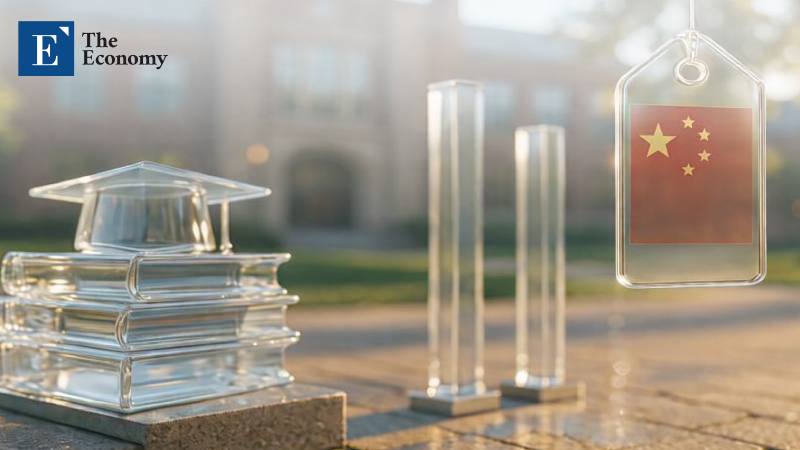
Chinese universities are rapidly ascending global rankings based on research performance, marking a decisive shift in the international academic landscape. Only a few years ago, U.S. institutions such as Harvard University and the Massachusetts Institute of Technology dominated the top tier. Today, Chinese universities are increasingly displacing their American counterparts. Analysts note that shrinking research budgets and slowing talent inflows in the United States, combined with China’s state-led strategy of massive research investment and systematic talent cultivation, are translating into a broader transfer of global scientific leadership beyond university rankings.
Chinese Universities Surge in Global Rankings, Harvard the Lone U.S. Holdout
According to the 2025 Leiden Ranking released on the 25th by the Centre for Science and Technology Studies (CWTS) at Leiden University in the Netherlands, Zhejiang University claimed first place, while Harvard University slipped to third. Second place and ranks four through nine were all occupied by Chinese universities, leaving Harvard and Canada’s University of Toronto as the only non-Chinese institutions in the top ten. Two decades ago, seven U.S. universities featured in the top ten, while China was represented only by Zhejiang University at around 25th place, underscoring the scale of the shift.
China’s momentum is also evident in other assessments. In the global university rankings based on academic performance compiled by the Informatics Institute of Middle East Technical University (METU) in Türkiye, Harvard retained the top spot, but only Stanford University joined it among U.S. institutions in the top ten. By contrast, four Chinese universities made the list. Commenting on the trend, former MIT President Rafael Reif said, “The volume and quality of papers coming out of China are extraordinary. They are overwhelming U.S. output.”
The rise of Chinese institutions is further confirmed by the Nature Index 2025, which evaluates global scientific research capacity. In the institutional rankings, the Chinese Academy of Sciences (CAS) retained first place for a second consecutive year, again outpacing Harvard University in second. The University of Science and Technology of China ranked third, followed by Zhejiang University in fourth and Peking University in fifth, with eight Chinese universities and research institutes occupying the top ten. Given that high-impact scientific publications are widely viewed as leading indicators of future technological commercialization, analysts argue that China’s grip on global industrial competitiveness is set to tighten further.
China also topped the country-level composite rankings for the second year in a row, overtaking the United States. While the U.S. maintained first place in life sciences and health and medical sciences, China secured commanding leads in physics, chemistry, and earth and environmental sciences, lifting it to the top overall. The score gap between China and the United States widened further compared with the previous year.
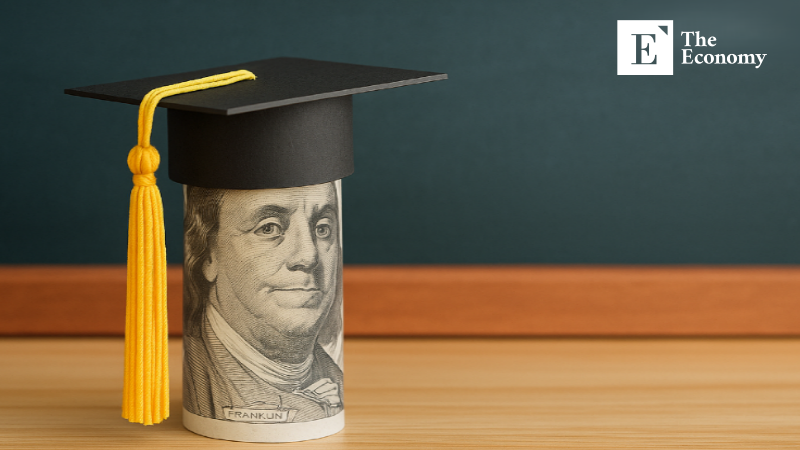
Budget Cuts Trigger a U.S. ‘Research Drought’
Once regarded by the global scientific community as a peripheral player, China is now widely seen as having consolidated its status as a leading power. In the past, Chinese research was often criticized for prioritizing quantity over quality. In recent years, however, the number of top-tier publications has surged, cementing China’s position as a bona fide scientific heavyweight. In 2000, eight U.S. universities populated the global top ten, with Harvard holding the top spot for years. That dominance began to erode in 2024, when it finally relinquished the crown.
Experts caution against framing the U.S. position simply as decline. Major institutions including Harvard, the University of Michigan, the University of California, Los Angeles, Johns Hopkins University, the University of Washington’s Seattle campus, the University of Pennsylvania, and Stanford University are producing far more research output than they did two decades ago. Even so, they have been unable to match the pace of China’s advance. Over the same period, Chinese universities’ publication output has traced a far steeper growth trajectory than that of the United States.
At the heart of this divergence lies a sharp contraction in U.S. federal research funding. Over the past year alone, more than 7,800 research grants were suspended or canceled. In March last year, the U.S. Department of Education terminated a $256 million contract with Harvard University, followed in April by the withdrawal of $400 million in federal contracts and grants from Columbia University. Funding worth $175 million was also cut from the University of Pennsylvania over disputes related to transgender sports policies. For U.S. universities that rely heavily on federal research funding as a core revenue stream, these cuts have proven devastating.
The Trump administration has further proposed slashing the budget of the National Science Foundation by more than half in its fiscal year 2026 budget submission to Congress. The State Department is also reviewing plans to exclude 38 universities, including Harvard and Yale, from future federal research partnership programs over diversity, equity, and inclusion hiring practices. At the same time, the administration’s restrictive immigration stance has curbed inflows of international students and foreign researchers. According to the Department of Homeland Security, the number of foreign students entering the United States last August fell 19% year on year.
China’s Overwhelming Capital Deployment and Meticulous Talent Strategy
By contrast, China has dramatically strengthened university competitiveness through state-led, large-scale research investment. In 2024, China poured $560 billion into research and development, rapidly closing in on the United States, which spent $656 billion. In a speech last year, President Xi Jinping stated that “the scientific and technological revolution is intertwined with competition among major powers,” underscoring Beijing’s view that scientific supremacy is essential to prevailing in strategic rivalry with the United States.
China’s talent acquisition policies have also played a critical role. Efforts to recruit advanced scientific talent began in earnest in the 1980s, with initiatives centered on the Chinese Academy of Sciences to address talent gaps and draw younger researchers into national development programs. When the rapid expansion of junior researchers exposed a shortage of mid-career scholars, Beijing launched the Hundred Talents Program in 1994, concentrating research funding on selected academics.
This was followed in 1998 by the Changjiang Scholars Program, designed to encourage overseas-trained scholars to return, and in 2008 by the Thousand Talents Program, widely credited with elevating China’s high-tech industries. The program aimed to attract 1,000 top scientists and engineers over a decade from 2009 to 2018. In parallel, China rolled out a series of higher education initiatives, beginning with Project 211 in 1991, Project 985 in 1998, and the Double First-Class University Plan in 2017, selecting roughly 40 universities from a pool of some 3,000 for intensive development as research-focused institutions.
China has also committed substantial funding to attract foreign researchers. Last autumn, it introduced a dedicated visa program for overseas graduates in science and technology fields. Domestically, China runs science-gifted programs from elementary school onward to cultivate talent in science, technology, engineering, and mathematics, allowing selected students to enter university at a young age and engage in research projects early in their academic careers.
Experts argue that shifts in university research competitiveness now serve as a bellwether for national power. A study published in the Proceedings of the National Academy of Sciences indicates that China has already closed much of the gap with the United States in global scientific leadership and could reach parity by around 2028. If disparities in research investment and talent recruitment continue to widen, analysts warn that the epicenter of the global academic ecosystem may increasingly tilt toward China.
With a decade of experience in education journalism, Lauren Robinson leads The EduTimes with a sharp editorial eye and a passion for academic integrity. She specializes in higher education policy, admissions trends, and the evolving landscape of online learning. A firm believer in the power of data-driven reporting, she ensures that every story published is both insightful and impactful.
Similar Post