Why STEM Majors Have Higher Tuition Fees: A Justified Cost

Why STEM Majors Have Higher Tuition Fees: A Justified Cost

Picture

Member for

1 year 6 months
Real name
Lauren Robinson
Bio
Vice Chief Editor
With a decade of experience in education journalism, Lauren Robinson leads The EduTimes with a sharp editorial eye and a passion for academic integrity. She specializes in higher education policy, admissions trends, and the evolving landscape of online learning. A firm believer in the power of data-driven reporting, she ensures that every story published is both insightful and impactful.

Modified

STEM (Science, Technology, Engineering, and Mathematics) master’s programs are among the most expensive graduate degrees, often rivaling or surpassing MBA programs in tuition costs. With some programs exceeding $60,000 in total fees, many students wonder why these degrees come with such a high price tag. While it may seem excessive at first glance, the reality is that STEM education requires substantial investment in faculty, research infrastructure, and industry collaborations. Unlike business or humanities programs, where a classroom and textbooks might suffice, STEM fields demand state-of-the-art labs, cutting-edge computing resources, and highly specialized instructors who could otherwise be earning much more in private industry.

Despite the high costs, STEM graduate degrees remain one of the best financial investments due to their high return on investment (ROI). Many STEM graduates secure well-paying jobs quickly, with fields like artificial intelligence, cybersecurity, and biomedical engineering offering six-figure starting salaries. Additionally, the strong global demand for STEM expertise means that tuition prices are unlikely to drop anytime soon. In this article, we break down why STEM master's programs are so expensive and why their cost is justified, covering everything from faculty salaries to research expenses and career prospects.

1. Higher Faculty Salaries in STEM Departments

  • STEM professors, especially in fields like engineering, medicine, and IT, have higher salaries than those in humanities or social sciences.
  • Professors often have industry experience, patents, and research projects that justify their compensation.
  • Competition with the private sector forces universities to pay competitive wages to retain talent.

STEM professors are among the highest-paid faculty members in universities due to their expertise, industry demand, and contribution to research. Unlike humanities professors, many STEM faculty members have extensive industry experience and continue to engage in cutting-edge research, making them valuable assets to their institutions. Fields like artificial intelligence, biotechnology, and data science offer lucrative salaries in the private sector, meaning universities must offer competitive wages to attract and retain skilled educators.

Additionally, many STEM professors are involved in patent development, government-funded research, and consulting projects. Their work directly contributes to technological advancements and industry partnerships, which bring prestige and financial benefits to the university. However, these faculty members demand higher salaries due to their dual role as educators and researchers.

Since universities need to compete with the private sector for top-tier faculty, higher tuition fees for STEM majors help fund these salary demands. This ensures that students receive instruction from experienced professionals who are actively engaged in their fields, rather than from purely academic theorists.

2. Costly Laboratory and Research Equipment

  • STEM education requires expensive lab facilities, equipment, and maintenance.
  • High-tech fields like biotechnology, physics, and engineering demand continuous investment in new technology.
  • Research opportunities for students also require significant financial backing.

One of the most significant contributors to high STEM tuition costs is the need for specialized laboratory facilities. Unlike humanities or business programs, which primarily rely on lecture halls and books, STEM programs require access to costly equipment such as spectrometers, supercomputers, and advanced medical devices. Maintaining these resources is not only expensive but also requires constant upgrades to keep pace with industry advancements.

For example, an engineering program may need wind tunnels for aerodynamics testing, while a biomedical program might require genome sequencing tools. These investments are crucial to ensuring that students gain hands-on experience with the same equipment they will encounter in their professional careers. Without continuous funding for such resources, STEM graduates would enter the workforce without the practical knowledge that employers expect.

In addition, universities invest heavily in student research opportunities, allowing them to participate in groundbreaking studies, publish papers, and contribute to technological innovation. These research programs, often funded by government grants and private corporations, still require substantial university support to cover operating expenses, further increasing tuition costs.

3. Smaller Student-to-Faculty Ratios and Personalized Education

  • STEM programs often have lower student-to-faculty ratios due to lab-based courses.
  • Individualized instruction, mentorship, and research supervision require more faculty members.
  • Smaller class sizes provide better hands-on learning experiences.

Unlike large lecture-based courses in non-STEM fields, many STEM programs require smaller class sizes due to their interactive and experimental nature. In lab-based courses, a single professor may oversee a class of only 15–20 students, ensuring that each student receives personalized guidance and supervision. This is necessary for safety, practical learning, and ensuring that students master complex concepts effectively.

Additionally, research-intensive STEM programs require professors to mentor students closely on projects, theses, and experiments. This level of individualized instruction necessitates hiring more faculty members and teaching assistants, which raises operational costs for universities. Unlike humanities courses, where a professor can lecture to hundreds of students at once, STEM subjects require direct engagement and hands-on experience, making mass instruction impractical.

To sustain this high-quality education model, universities charge higher tuition fees to cover the costs of additional faculty, laboratory supervisors, and research assistants. The investment in smaller class sizes ultimately benefits students, ensuring they receive focused attention and a deeper understanding of complex scientific principles.

4. Industry Partnerships and Cutting-Edge Research

  • STEM departments often partner with private industries, influencing curriculum and research.
  • Universities fund state-of-the-art research to maintain industry relevance.
  • These partnerships require ongoing investments in talent, facilities, and technology.

STEM fields evolve rapidly, and universities must stay ahead of technological advancements to remain competitive. Many STEM programs establish partnerships with leading corporations, allowing students to work on real-world projects, gain industry insights, and even secure internships before graduation. However, maintaining these relationships and offering industry-relevant coursework requires significant financial investment.

For example, universities that collaborate with companies like Google, Tesla, or Pfizer may need to set up dedicated research centers, purchase industry-grade tools, and provide specialized training for faculty. These partnerships often come with the expectation that universities will continue producing graduates equipped with cutting-edge skills, requiring continuous investment in faculty development, facility upgrades, and new research initiatives.

Although these collaborations benefit students by increasing employment opportunities and hands-on learning experiences, they also contribute to the rising costs of STEM education. Tuition fees help universities sustain these partnerships, ensuring that graduates remain competitive in the job market and are well-prepared for industry demands.

5. STEM Degrees Have Higher Earning Potential and ROI

  • STEM graduates generally have higher starting salaries than non-STEM peers.
  • The return on investment (ROI) justifies higher tuition fees.
  • Strong job demand in tech, engineering, and healthcare provides career stability.

One of the strongest justifications for higher STEM tuition fees is the long-term financial return on investment. Graduates of STEM programs consistently earn higher starting salaries and experience greater job stability than those in non-STEM fields. Fields such as computer science, data science, and biomedical engineering have some of the highest-paying entry-level positions, making the upfront cost of education a worthwhile investment.

According to salary reports, STEM graduates often see an immediate return on their educational investment, with some earning six-figure salaries within a few years of entering the workforce. Additionally, the demand for STEM professionals continues to grow, ensuring strong job security and career advancement opportunities. Unlike fields with oversaturated job markets, STEM fields remain resilient in economic downturns, further validating the cost of education.

Higher tuition fees also reflect the significant value of the education received. Universities invest heavily in ensuring that their STEM graduates are equipped with industry-relevant skills, advanced technical knowledge, and practical experience. The financial benefits that students gain over the course of their careers far outweigh the initial costs, making the investment in a STEM degree well-justified.

Conclusion: STEM Tuition Fees Are a Necessary Investment

  • High tuition fees support top-tier faculty salaries, advanced facilities, and hands-on learning.
  • Industry partnerships and cutting-edge research drive innovation but require significant funding.
  • Graduates benefit from strong job prospects, high salaries, and long-term career stability.

While STEM degrees come with higher tuition costs, they offer unparalleled educational quality, research opportunities, and career benefits. From ensuring access to experienced professors and cutting-edge laboratories to securing industry partnerships and high job placement rates, the costs associated with STEM programs directly contribute to students' future success. Ultimately, the investment in a STEM degree pays off, making the higher tuition fees both necessary and justifiable.

Picture

Member for

1 year 6 months
Real name
Lauren Robinson
Bio
Vice Chief Editor
With a decade of experience in education journalism, Lauren Robinson leads The EduTimes with a sharp editorial eye and a passion for academic integrity. She specializes in higher education policy, admissions trends, and the evolving landscape of online learning. A firm believer in the power of data-driven reporting, she ensures that every story published is both insightful and impactful.

AAUP and NADOHE Seek Injunction Against Trump’s Executive Orders Targeting DEI in Higher Education

AAUP and NADOHE Seek Injunction Against Trump’s Executive Orders Targeting DEI in Higher Education

Picture

Member for

1 year 6 months
Real name
Lauren Robinson
Bio
Vice Chief Editor
With a decade of experience in education journalism, Lauren Robinson leads The EduTimes with a sharp editorial eye and a passion for academic integrity. She specializes in higher education policy, admissions trends, and the evolving landscape of online learning. A firm believer in the power of data-driven reporting, she ensures that every story published is both insightful and impactful.

Modified

The National Association of Diversity Officers in Higher Education (NADOHE) and the American Association of University Professors (AAUP) have sued to block President Donald J. Trump's executive orders requiring universities and colleges to dismantle their diversity, equity, and inclusion (DEI) programs. The lawsuit contends that these mandates are unconstitutional and endanger academic freedom.

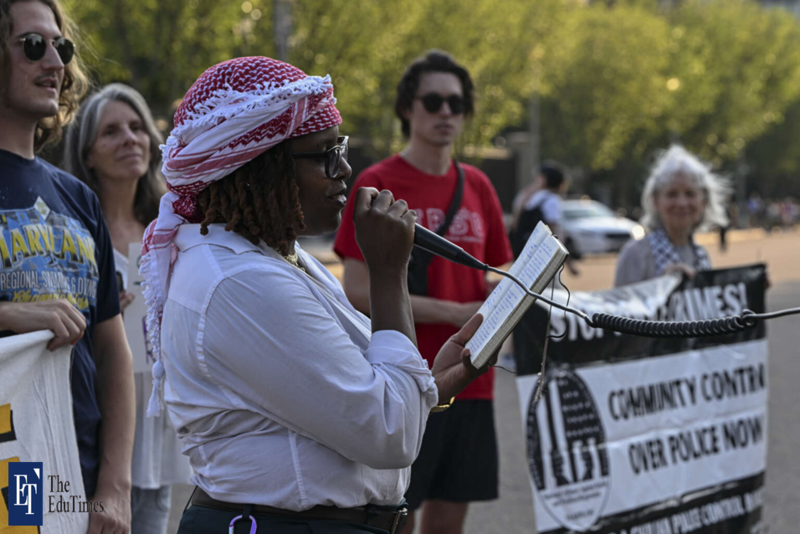
Source: https://truthout.org/articles/meet-the-campus-leaders-fighting-back-against-right-wing-anti-dei-crackdowns/

The Restaurant Opportunities Centers United and the Baltimore Mayor and City Council are also plaintiffs in the case, which was filed in the federal district court in Baltimore on February 3, 2025. The goal of the lawsuit is to stop these executive orders from being implemented in their respective jurisdictions.

The Executive Orders in Question

Shortly after assuming office for a second term, Trump issued two executive orders:

  • The January 20, 2025, J20 Order, "Ending Radical Government DEI Programs and Preferencing," requires the cancellation of all federal funding and contracts pertaining to DEI.
  • J21 Order: "Ending Illegal Discrimination and Restoring Merit-Based Opportunity" (January 21, 2025), which launches compliance investigations into universities with endowments over $1 billion and mandates that institutions attest to not promoting DEI programs.

The J21 Order, which the White House referred to as "the most comprehensive and important federal civil rights measure in decades," ends what it describes as "anti-constitutional and deeply demeaning 'equity' mandates" and restores "individual dignity, hard work, and excellence."

Opposition from Higher Education Leaders

NADOHE President and CEO Paulette Granberry Russell vehemently denounced the executive orders, saying they violate “the principles of diversity, equity, and inclusion and accessibility within the fabric of our federal government and beyond.” She also said the Trump administration’s actions create “an environment of fear and uncertainty,” forcing organizations to renounce their commitment to justice and equity.

AAUP and NADOHE argue that the executive orders represent an unconstitutional overreach, violating the rights of educational institutions and professionals engaged in diversity work. The lawsuit asserts that the orders violate multiple constitutional provisions:

  • Article 1, Section 8: Grants Congress, not the President, the power to allocate federal funding and establish programs. The orders’ mandates to cut DEI-related grants and contracts overstep executive authority.
  • The Fifth Amendment: The lawsuit contends that the orders are impermissibly vague, failing to define key terms such as “DEI,” “equity,” and “equity-related,” leaving institutions uncertain about compliance requirements.
  • The First Amendment: The lawsuit argues that the orders impose viewpoint-based restrictions on free speech by discouraging the promotion of diversity and inclusion.

The Vagueness and Uncertainty of the Orders

The complaint draws attention to both directives' vague wording and unclear instructions. The J21 Order directs the Attorney General to look into institutions without defining the selection criteria, leaving colleges and universities unsure of their status. Similarly, the J20 Order directs agencies to stop awarding DEI-related grants “to the maximum extent allowed by law,” but it doesn’t define what constitutes “equity-related”.

 
According to the lawsuit, these executive orders have a "chilling effect" on universities, deterring conversations, curriculum development, and research on diversity, equity, and inclusion. Academic freedom is also threatened by the certification requirement that institutions refrain from DEI activities, since universities risk losing federal funds if their faculty or programs are found to be non-compliant.

Broader Implications for Higher Education and Civil Rights

Nearly 60 years of federal efforts to encourage diversity in recruiting and contracting are reversed by the J21 Order. Non-discriminatory hiring practices in federally sponsored projects have been guaranteed by affirmative action laws since President Lyndon B. Johnson's Executive Order 11246 in 1965. These safeguards are eliminated by Trump's order, which affects federal contractors, non-profits, and institutions.

In reaction to the executive orders, the National Institutes of Health (NIH), which provides funding for a large amount of university research, has already started to reduce awards related to DEI activities. These developments result in financial deficits for institutions like Johns Hopkins University and the University of California system, which raise questions about the long-term viability of academic research initiatives.

Advocates for education and legal professionals caution that the decrees may have far-reaching effects. According to national legal consulting company Morrison Forster, J21 represents “a sea change at the federal level on decades-old affirmative action and anti-discrimination requirements.” Institutions are uncertain about compliance and possible penalties in the absence of clear enforcement instructions.

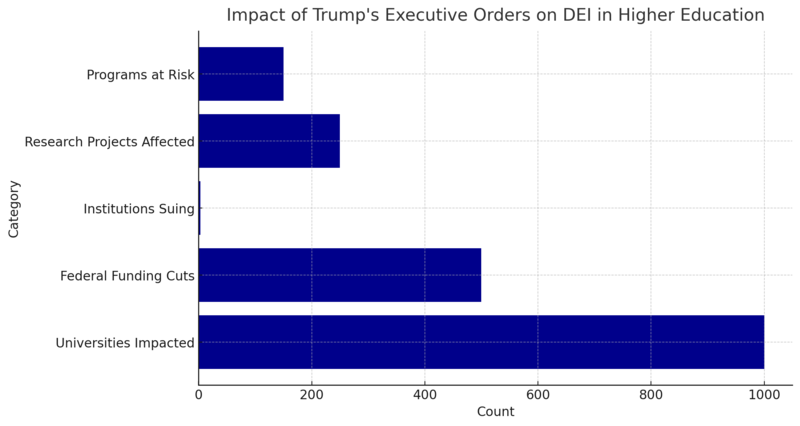
Note: Impact of Trump's executive orders on DEI programs in higher education

Academic Leaders Respond

The executive orders, according to AAUP President Todd Wolfson, stifle scholarly debate, impede important health and social research, and widen societal divides for political ends.

There have already been reports of funding freezes and research project pauses impacting studies related to DEI. According to a recent University World News report, the new approach has made it harder for faculty in the social sciences, public health, and education to get government research funds. According to AAUP spokesman Kelly Benjamin, certain research programs are completely closing as a result of financial difficulties, while other universities are also seeing disruptions.

Legal and Political Implications

The plaintiffs will contend during the trial that Trump's executive orders violate constitutional rights and go beyond the scope of presidential authority. The complaint highlights that without congressional consent, the executive branch cannot unilaterally cut off funding or set restrictions. Furthermore, institutions are exposed to capricious enforcement due to the administration's vague and expansive wording.

The implementation of these executive directives will be stopped while legal proceedings are ongoing if the court granted the injunction. It is anticipated that this lawsuit would establish a precedent regarding the executive branch's bounds in determining civil rights safeguards and higher education policy.

Uncertain Future for DEI-Related Research

The future of research financing continues to be a major concern for many in the scientific community as universities and research organizations try to manage these developments. Researchers from a wide range of fields, including social studies and biomedical science, are concerned that the lack of clear criteria on the evaluation of DEI-related projects under the incoming administration may stifle vital investigations that seek to solve structural imbalances. Although the long-term effects of these regulations are yet unknown, the uncertainty has already had a negative impact on researchers like Kendra Dahmer, a postdoctoral researcher at the University of California, Berkeley. The administration's extensive DEI restrictions could endanger her work, which is supported by the National Institutes of Health (NIH).

As the case progresses, academic institutions, instructors, and students nationwide await a decision that will impact DEI initiatives going forward as well as the larger academic freedom environment in the US.

Picture

Member for

1 year 6 months
Real name
Lauren Robinson
Bio
Vice Chief Editor
With a decade of experience in education journalism, Lauren Robinson leads The EduTimes with a sharp editorial eye and a passion for academic integrity. She specializes in higher education policy, admissions trends, and the evolving landscape of online learning. A firm believer in the power of data-driven reporting, she ensures that every story published is both insightful and impactful.

Global Impact of Trump's USAID Shutdown

Global Impact of Trump's USAID Shutdown

Picture

Member for

1 year 6 months
Real name
Lauren Robinson
Bio
Vice Chief Editor
With a decade of experience in education journalism, Lauren Robinson leads The EduTimes with a sharp editorial eye and a passion for academic integrity. She specializes in higher education policy, admissions trends, and the evolving landscape of online learning. A firm believer in the power of data-driven reporting, she ensures that every story published is both insightful and impactful.

Modified

The Global Response to the USAID Funding Freeze

Due to the international attention generated by the USAID funding embargo, other countries have stepped in to cover the shortfall. For students impacted by the freeze, the UK and the EU have launched emergency research funds and fellowships. In an effort to lessen the impact on Egyptian and African institutions, Canada and Japan are also looking into ways to increase the scope of their educational assistance programs. By providing more scholarships through the Belt and Road Initiative, China, which has been gaining sway over African higher education, has taken advantage of the freeze to fortify its educational alliances.

It is impossible to exaggerate the importance of USAID. By promoting stability and goodwill, its educational efforts not only enhance people's lives but also build ties across nations. In addition to undermining US soft power, cutting down USAID's educational programs would reverse years of development in developing countries. It is still hoped that long-term, sustainable funding methods may be found to continue the purpose of educational empowerment as governments and universities look for alternate options.

Since its founding in 1961, the United States Agency for International Development (USAID) has been a pillar of American foreign assistance, contributing significantly to global development and education. USAID has strengthened institutions, increased educational opportunities, and promoted sustainable growth in low- and middle-income nations through collaborations with universities and nonprofit groups.

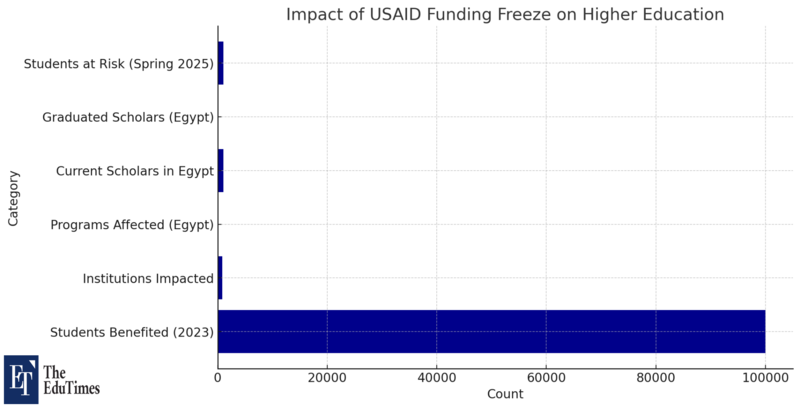
Nearly 100,000 students benefited from USAID's higher education programs in 2023 alone, which had an impact on 830 institutions globally. Beyond traditional schooling, its programs support food security projects, workforce training, and research on climate change. One such example is the Feed the Future program, which addresses world hunger via research and education in partnership with more than 80 U.S. universities.

As part of a review of U.S. foreign aid spending, USAID is facing a 90-day budget freeze as of January 20, 2025, notwithstanding these contributions. Scholarship programs, research initiatives, and institutional assistance are all disrupted by this abrupt stop, placing academic institutions and thousands of students in a state of uncertainty. USAID has historically been a key player in workforce development, governance, and global health breakthroughs; the hiatus raises fears about setbacks in these areas.

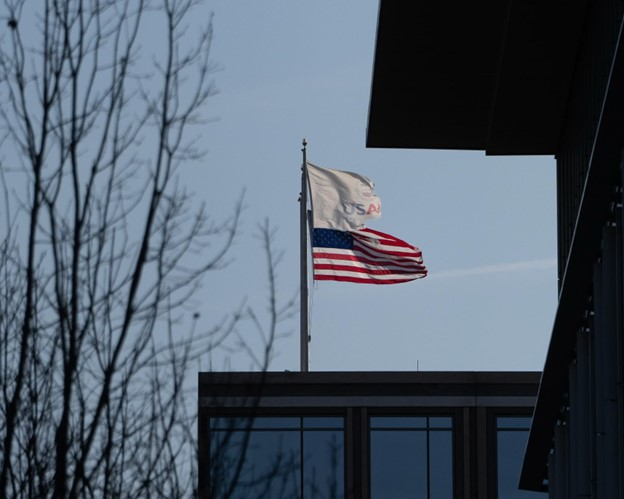
Note: Trump to cut USAID employees from 10,000 to 290 / Source: https://solacebase.com/trump-to-cut-usaid-employees-from-10000-to-290-reports/

Impact on African Higher Education

Through a number of programs, including the following, USAID has played a significant role in assisting African universities:

  • Institutional collaborations between American and African institutions that promote developments in public health research, agricultural innovation, and climate research.
  • Research partnerships that help African universities tackle regional and international issues.
  • Training courses that improve university governance and research capacities for African scholars and administrators.

These programs are disrupted by the funding freeze, which might impede advancement in vital fields including agriculture, health, and climate change. Important repercussions include:

  • Health Research Delays: Important health initiatives may be impacted by the stalling of projects pertaining to HIV/AIDS, malaria, and new diseases.
  • Climate Research Setbacks: Delays in studies on climate adaptation, desertification, and droughts could make it more difficult for Africa to address climate challenges.
  • Agricultural Innovation at Risk: Projects to create robust crops and environmentally friendly farming methods are insecure.

Furthermore, a lot of African students depend on funds provided by USAID in order to receive high-quality education. The aid freeze may result in:

  • Fewer scholarship options for those wishing to attend American universities.
  • A reduction in faculty interactions, which erodes scholarly partnerships.
  • A change in the destinations of students, as more African students are looking at countries like China, the UK, Europe, and Canada.

Higher education in Africa will face long-term difficulties as a result of the aid embargo. African institutions must look for alternative funding methods and partnerships in order to carry out their crucial work in the absence of USAID sponsorship.

Impact on Egyptian Universities and Students

The worst disruption is likely to occur in Egypt, which receives the most U.S. money for higher education in Africa. Students seeking degrees in vital subjects including water management, energy, agriculture, and nursing have received support through the USAID-funded Scholars Initiative, which is run by the American University in Cairo (AUC) and other Egyptian universities. 788 students have benefited from the program since 2020, and 84 of them have already graduated.

But 1,077 students who are now enrolled at public and private universities, such as Cairo, Alexandria, Mansoura, Al Alamein International, Badr in Cairo, and the Arab Academy for Science, Technology & Maritime Transport, are directly impacted by the funding ban. Students who were scheduled to start classes in the spring of 2025 and Bridge Year students—those getting ready for their first academic year through English and study skills programs—are especially at risk. These youngsters' academic futures are uncertain in the absence of USAID assistance.

Foundational education initiatives and civil society organizations are also impacted by the funding suspension, in addition to institutions. Professional development projects and teacher training programs are among the six important educational initiatives that have been put on hold. There is a risk to the Teach-for-Tomorrow project and other capacity-building programs that educate government workers.

Note: Impact of Trump's USAID Funding Freeze on Higher Education.

Response from Egyptian Institutions, Grassroots, and International Support Efforts

Egypt's Higher Education and Scientific Research Ministry acknowledged the gravity of the situation and declared on January 29, 2025, that the universities in question will pay the tuition for the remaining second semester for the impacted students. Students will be able to continue their education without facing immediate financial obstacles because of this promise.

In order to assist their students, Egyptian colleges have taken proactive steps. According to Ain Shams University, impacted scholarship recipients will receive full tuition reimbursement as long as they continue to meet academic requirements. Additionally, it pledged to maintain access to housing, student services, and academic resources.

In a same vein, AUC President Ahmad Dallal promised that the university would use budget cuts and fundraising to cover tuition, housing, and other educational costs for the Spring 2025 term. He did admit, though, that they are unable to provide USAID scholarships to new students who were hoping to enroll at the university due to budgetary limitations.

Students started the #Uncertain_Future_for_AUC_Students social media campaign in response to the funding suspension, demanding prompt resolutions. Increased efforts to find alternate financing sources have resulted from this demand.

In order to gather contributions from friends, instructors, and graduates, AUC has also established an Emergency Student Assistance Fund. To assist impacted students during their academic careers, the AUC Student Union has started a crowdfunding campaign and is actively looking for outside funding sources in partnership with the Office of Advancement.

Picture

Member for

1 year 6 months
Real name
Lauren Robinson
Bio
Vice Chief Editor
With a decade of experience in education journalism, Lauren Robinson leads The EduTimes with a sharp editorial eye and a passion for academic integrity. She specializes in higher education policy, admissions trends, and the evolving landscape of online learning. A firm believer in the power of data-driven reporting, she ensures that every story published is both insightful and impactful.

President Trump and the Threat to Academic Freedom: Concerns from the Academic Community

President Trump and the Threat to Academic Freedom: Concerns from the Academic Community

Picture

Member for

1 year 2 months
Real name
William Spencer
Bio
Chief Editor
A veteran in education journalism, William Spencer has spent over 30 years dissecting the policies and trends shaping higher education. As Chief Editor of The EduTimes, he is committed to delivering in-depth analysis on university rankings, admissions strategies, and the future of learning. With an unwavering dedication to journalistic integrity, he ensures that every article upholds the highest standards of accuracy and insight.

Modified

The political environment is still being shaped by President Donald Trump's administration, his education policies have raised serious questions about the future of academic freedom in the US. With the passage of several executive orders and directives, the academic community is considering the possible effects in the education system, that some see as a direct danger to academic independence.

The 2020 executive order that Trump issued to combat what he called "radical indoctrination" in schools was one of the most controversial parts of his education program. The program "Ending Radical Indoctrination in K-12 Schooling" aimed to advance a "patriotic education" that minimized conversations on historical and social injustices and structural racism while elevating American history. Many academics and educators, however, saw this action as an attempt to control the curriculum and impose a politically motivated view of history that ran counter to the fundamental goals of academic research.

The decree drew harsh criticism from Harry Keyishian, a prominent player in the struggle for academic freedom. Keyishian said that Trump's actions could discourage intellectual freedom in a similar way to the McCarthy era, when political conformity was enforced within academic institutions. The Trump administration ran the risk of weakening academic integrity and discouraging academics from engaging in true, autonomous concept discovery by trying to enforce a certain ideological narrative. Keyishian underlined that such actions might push the nation toward authoritarianism, where a strictly defined nationalistic purpose is prioritized over intellectual criticism.

Moreover, the drive for "patriotic education" in K–12 schools also encompassed more general concerns about diversity, equity, and inclusion (DEI). DEI programs at colleges were specifically targeted by Trump's administration, which aimed to eradicate them in favor of a more uniform educational experience. The administration specifically claimed that DEI initiatives, which aimed to establish welcoming environments for underrepresented groups, were fostering a climate of "reverse discrimination."

Numerous public colleges rely significantly on student loans, federal grants, and other sources of funding. Trump's education proposals thus sparked worries that these institutions would be under a lot of pressure to follow political directives to keep their financing. The administration may have significant control over academic activities, such as the kinds of research conducted, the ideologies taught, and the freedom of expression itself inside the academic setting.

Source: https://www.nea.org/nea-today/all-news-articles/how-project-2025-would-devastate-public-education

In Keyishian v. Board of Regents (1967), which overturned the necessity for educators to take loyalty oaths and upheld academic freedom as a fundamental tenet of democratic society, provides the historical basis for defending academic freedom in the United States. Keyishian recalled how this decision protected academic institutions from political meddling. He and others pointed out that in the current political environment, where executive directives and ideological pressures jeopardize academic institutions' independence, the safeguards outlined in Keyishian might not be enough or appropriate.

Higher education was often portrayed by the administration as a haven of "liberal indoctrination," advancing a worldview that challenges conventional American values. Academics who disagreed with the administration's views, especially those that dealt with racial, gender, and climate change issues, voiced worries that their work may be suppressed or politically censored.

Research was also affected by this concern of ideological dominance, particularly in scientific domains. The scientific community was alarmed by the Trump administration's suspension on government research funding, especially grants from the National Institutes of Health (NIH). Uncertainty resulted from the abrupt suspension of billions of dollars in federal research funds, and scientists were afraid of political backlash for generating studies that went against the administration's stance. If scientists were financially compelled to align their research with political beliefs, the fundamental basis of scientific investigation might be compromised.

The administration's focus on cutting the government workforce and shifting scientific research goals toward politically acceptable results also had long-term effects for the United States' position as a leader in scientific innovation worldwide. Many scholars started looking for possibilities elsewhere, especially in nations where academic independence was still safeguarded. The United States' standing as a leader in science and technology could have been weakened by this brain drain and the dismantling of international cooperation.

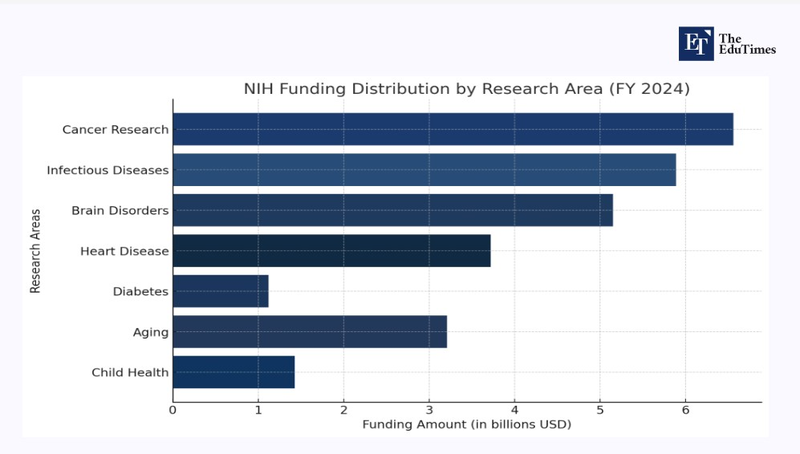
Note: The NIH funding distribution across various research areas in FY 2024.

Trump's support for school choice was one of his most divisive educational policies. Trump sought to give parents more authority over their children's education by supporting the growth of private schools, charter schools, and school vouchers. Critics said that this strategy could undermine the values of academic freedom in public education, while others praised it for improving educational performance. When school choice and public school funding cuts were combined, there were worries that market forces and ideological pressures would make it more difficult for public schools to provide a critical, well-rounded education free from political meddling.

Furthermore, the drive for school choice and privatization was perceived as a danger to the independence of educational establishments, especially public schools, which have historically functioned as autonomous organizations that place a higher priority on scholarly research than political sway. Increased emphasis on private and religiously based educational options, according to critics, may restrict prospects for underserved communities and exacerbate educational inequality. Furthermore, such a change would further politicize education, resulting in a situation where political or commercial interests, rather than free speech and intellectual inquiry, determine curricula.

The politicization of education, according to academics, researchers, and universities, could make it more difficult to challenge the status quo, encourage critical thinking, and openly explore ideas. They underlined that academic freedom is an essential component of democracy and not merely an ideal. The entire society runs the risk of losing its ability to have important, revolutionary conversations if universities and research institutions lose their independence. The Trump administration's policies regarding academic freedom and education caused a great rift between those who thought they would improve national cohesion and those who were concerned that they would undermine the intellectual independence of educational establishments. To protect academic freedom and make sure that learning environments encourage independent thought and critical investigation, the academic community must continue to be more watchful for the future generation.

Picture

Member for

1 year 2 months
Real name
William Spencer
Bio
Chief Editor
A veteran in education journalism, William Spencer has spent over 30 years dissecting the policies and trends shaping higher education. As Chief Editor of The EduTimes, he is committed to delivering in-depth analysis on university rankings, admissions strategies, and the future of learning. With an unwavering dedication to journalistic integrity, he ensures that every article upholds the highest standards of accuracy and insight.

Losing its Appeal to Foreign Students, Universities in Canada facing a predicament

Losing its Appeal to Foreign Students, Universities in Canada facing a predicament

Picture

Member for

1 year 6 months
Real name
Megan Donovan
Bio
Education & Admissions Correspondent
Megan Donovan covers the fast-changing world of college admissions, standardized testing, and student success strategies. With a background in academic counseling, she brings a deep understanding of the challenges students face. Whether she’s analyzing Ivy League acceptance trends or uncovering flaws in the education system, her work provides invaluable insights for students and parents alike.

Modified

Canada's higher education institutions are facing significant challenges as the international student market, a critical revenue stream for many universities, suffers a series of setbacks. The financial fallout and no-show epidemic hits Canadian universities as many international students are considering other options such as the UK and US. Canada has lost its global appeal to many international students as they are searching for better prospects elsewhere. 

International students, who contribute billions to Canada's economy, have become an essential pillar of the country's post-secondary education sector. However, a combination of bureaucratic hurdles, inflationary pressures, and shifting immigration policies is leading to alarming drops in enrollment and a record number of no-shows this fall. Apart from it being revenue-generating to Canadian universities, international students bring a wide array of benefits to Canadian society, economy, and educational system. Their presence is a cornerstone of Canada’s global reputation as a hub for quality education and multiculturalism. It also helps address skill gaps in Canada’s workforce, contributing to the country’s economic growth and innovation.

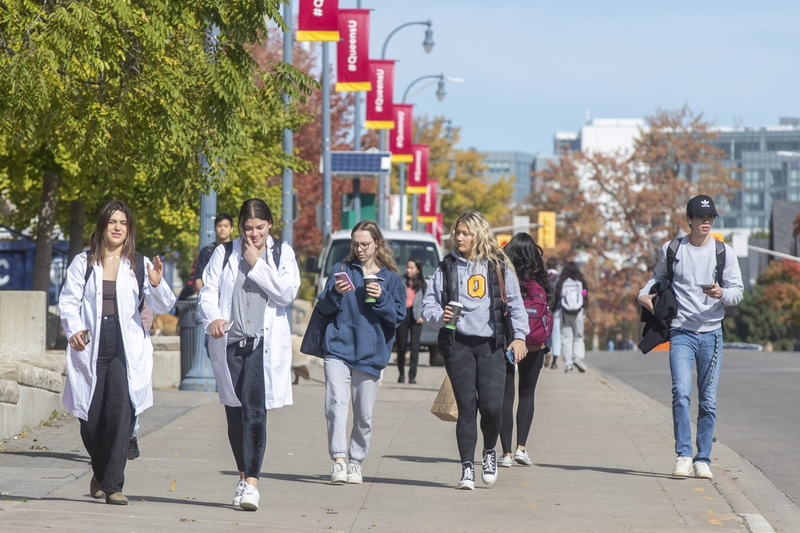
Note: People walk around on the Queen’s University campus in Kingston, Ont., on Oct. 4, 2022. / Source: THE CANADIAN PRESS IMAGES/Lars Hagberg

A Financial Crisis for Canadian Universities

International students, who traditionally account for a substantial portion of tuition revenue, are now proving to be a double-edged sword for Canadian universities. According to a report from University Affairs, the fallout from a decline in international student arrivals is hitting university budgets hard, especially at institutions that rely heavily on these students' tuition fees to balance their finances. Canadian universities have seen rising costs and have been forced to rethink their financial strategies in the face of declining numbers of international students.

These students contribute nearly $6.9 billion to Canada's economy annually, with many institutions receiving a large share of their tuition revenue from this demographic. The financial loss is particularly significant for universities with large international student populations, which rely on these funds to maintain and expand operations.

But beyond the numbers, the problem is also reflective of a larger issue in Canada's immigration and education systems. A CBC News article sheds light on some of the reasons why students are either deferring their studies or abandoning their plans to study in Canada altogether. Increased inflation and the cost of living have made it much more difficult for international students to afford their education in Canada, while stricter visa processes and delays in immigration approvals have caused uncertainty for many students. These factors have led to a phenomenon where students are simply not showing up for classes as expected.

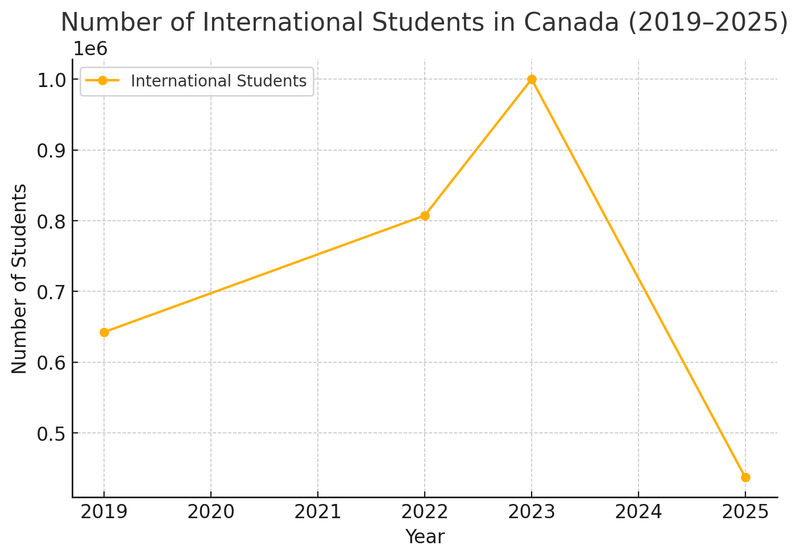
The situation has been compounded by an alarming number of no-shows, which were recently reported by The PIE News. In just two months, nearly 50,000 international students across Canada have failed to arrive at their respective institutions, leaving schools scrambling to adjust. This issue is not just a small blip in the system; it signals a worrying trend for universities that rely on international enrollments for both revenue and diversity.

For many students, the decision to study abroad is a complex one that involves considerable time, financial investment, and effort. As inflation has risen globally, many students have been unable to afford their original plans to study in Canada, while some may have opted for more affordable or less restrictive options in other countries. Compounding these economic concerns are delays and complications in Canada’s immigration and visa processes. The complexity and uncertainty surrounding visa approvals have left many international students in limbo, preventing them from securing necessary documentation in time for the fall semester.

Note: The number of international students in Canada from 2019 to 2025.

Policy Changes and Immigration Delays

The Canadian government's focus on international students has been largely positive over the past few years, with initiatives aimed at attracting global talent to bolster the country’s economy. However, there have been some notable shifts in immigration policies that are beginning to raise concerns among prospective international students.

One significant challenge is the increased scrutiny of study permits, which has led to delays in visa processing times. A CBC article highlights how these delays have made it increasingly difficult for students to arrive in Canada on time, resulting in a situation where many students are forced to defer their plans or cancel them altogether.

In addition, the financial burden on international students has also been exacerbated by the rise in tuition fees and living costs. While Canadian universities have long been considered an attractive destination for international education due to their quality and relatively affordable tuition rates compared to the US and the UK, these advantages are being undermined as inflation impacts everything from accommodation to transportation.

Note: International students in Canada / Source: https://www.visaplace.com/blog-immigration-law/life-in-canada-as-an-international-student/

The Way Forward: Addressing the Crisis

With many Canadian universities grappling with these challenges, questions are being raised about how they will recover from this crisis. As the number of international student no-shows continues to grow, the long-term financial stability of these institutions is at risk. University administrators and policymakers must come together to find solutions that can support international students in a time of growing uncertainty.

Financial Aid and Support: More financial assistance and scholarships targeted at international students could be a crucial way to alleviate the financial pressures students face. Additionally, universities should consider implementing more flexible payment options and offering greater support for students in navigating visa and immigration processes.

Streamlining Visa Processing: Streamlining and expediting visa processes for international students should be a priority. As it stands, the delays in processing times are a key barrier to students making the decision to study in Canada. Faster approvals would not only help to restore confidence among international students but also ensure they can arrive in time for the start of their academic terms.

Addressing Cost of Living: Universities may also need to partner with local governments and organizations to help mitigate the rising cost of living. Offering more affordable housing options, transportation subsidies, or even meal plans could help ease some of the financial burdens that are currently deterring students from coming to Canada.

In the coming months, Canadian institutions will need to adapt quickly to the changing landscape of international education. If they fail to respond effectively to these challenges, the impact on their finances, academic diversity, and global reputation could be profound. However, with thoughtful policy adjustments and increased support for international students, Canada’s universities have the potential to not only recover but thrive in an increasingly competitive international education market.

Picture

Member for

1 year 6 months
Real name
Megan Donovan
Bio
Education & Admissions Correspondent
Megan Donovan covers the fast-changing world of college admissions, standardized testing, and student success strategies. With a background in academic counseling, she brings a deep understanding of the challenges students face. Whether she’s analyzing Ivy League acceptance trends or uncovering flaws in the education system, her work provides invaluable insights for students and parents alike.