Seasonal Worker Program Turns Into Pipeline for Illegal Stay, Mass Expulsions to Force Overhaul of Domestic Labor Market

With a decade of experience in education journalism, Lauren Robinson leads The EduTimes with a sharp editorial eye and a passion for academic integrity. She specializes in higher education policy, admissions trends, and the evolving landscape of online learning. A firm believer in the power of data-driven reporting, she ensures that every story published is both insightful and impactful.
Input
Modified
Lax oversight of seasonal worker and family-invitation schemes
Illegal stay on the rise, broker involvement expanding
Universities scrambling to recruit foreign students also exploited as illegal stay channels
As the United States steps up investigations into forced labor practices across Asia, including South Korea, concerns are mounting that weak oversight of foreign labor could jeopardize exports of Korean goods and agricultural products. Against this backdrop, foreign workers are increasingly exposed to incentives to remain illegally. In particular, as domestic universities—strained by frozen tuition and shrinking applicant pools—aggressively recruit foreign students, cases of individuals entering on student visas and then working illegally have also been rising. Experts warn that if large-scale crackdowns materialize, sweeping restructuring across agriculture, education, and the broader industrial landscape will be unavoidable.
Preference for Illegal Stay Over the Formal System
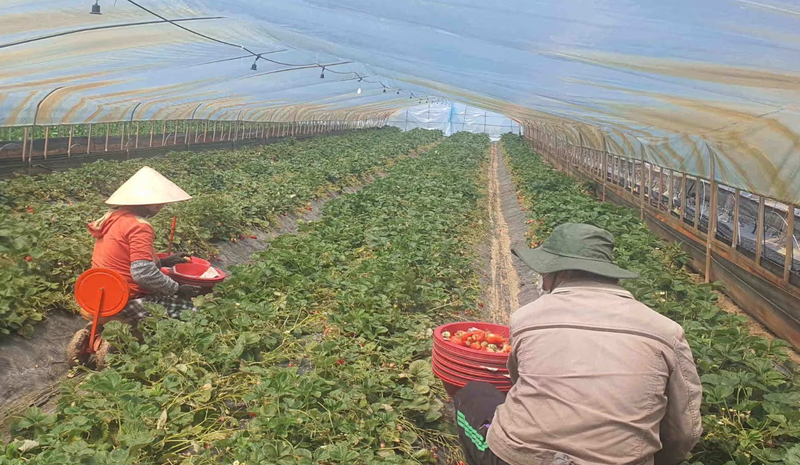
According to the agricultural sector and legal community on the 21st, the foreign seasonal worker program (E-8 visa), designed to alleviate labor shortages during peak farming seasons, has increasingly devolved into a conduit for illegal stay. Short contract periods and wages lower than those in manufacturing encourage workers to enter as seasonal laborers and then seek other jobs. Many seasonal workers incur debts to brokers during the entry process, and the pressure to repay those debts quickly is another factor driving them toward illegal stay. Interest rates charged by brokers commonly reach several tens of percent annually.
By contrast, non-professional foreign workers in manufacturing (E-9 visa holders) may stay for four years and ten months, with the option to extend once—after a six-month return to their home country—allowing up to nine years and eight months of total employment in South Korea. Seasonal workers, however, are not eligible for extensions. For workers in need of income, remaining illegally becomes a rational choice after overcoming the hurdle of entry.
Low wages and irregular working hours further heighten the temptation. Most seasonal workers nationwide are employed about 35 hours per week at the statutory minimum wage—approximately $7.70 per hour this year—earning roughly $1,080 to $1,150 per month. Manufacturing workers, while also paid at the minimum hourly rate, often log longer hours and earn additional overtime pay, bringing monthly income to around $2,300 in many cases.
Family-Invited Entrants Also Turning Illegal
An increasing number of individuals who enter South Korea as seasonal workers through family invitations—extended by marriage migrants—are also remaining illegally. The family-invitation visa was designed to support labor-short rural communities while reducing worker attrition, based on the assumption that proximity to family would lower defection rates. Indeed, the attrition rate among seasonal workers fell from 17.1% in 2021 to 1.6% last year.
However, relatively loose entry procedures for family-invited seasonal workers have led to a rise in illegal entries. The seasonal worker program operates through two main channels: local governments recruiting workers via agreements with overseas municipalities (E-8-1 or E-8-3 visas), and foreign residents in South Korea inviting overseas family members (E-8-2 or E-8-4 visas). While local governments rigorously review documentation for municipally recruited workers, family-invited cases rely heavily on employer input. This creates openings for brokers with employer connections to bring workers into the country with relative ease.
Under program rules, if an invited family member absconds, the recommender faces a one-year suspension from making recommendations, and permanent disqualification if false recommendations are proven. Absconded workers are subject to deportation and reentry bans upon detection. Yet brokers often manipulate documents—such as falsifying residence registrations of marriage migrants—to link employers and workers. Required documentation can also be fabricated. To qualify as a seasonal worker, applicants must submit proof of at least one year of agricultural or fisheries work, or relevant certifications or degrees. One broker affiliated with an administrative agency office said of such proof, “As long as the applicant takes photos in front of rice paddies or fields back home, there’s no problem.”
Workers entering through brokers pay substantial fees. In one case reported by a migrant advocacy group, a foreign worker identified as A paid brokerage fees totaling about $1,550 over five months after entering on a family-invitation visa. A also transferred roughly $155 per month to the relative who sponsored the recommendation and paid additional fees to an administrative agent for paperwork. Burdened by excessive fees, such workers are driven to seek higher earnings, often slipping into illegal stay.

Students Work Illegally, Schools Falsify Attendance
Provincial universities have long been exploited as channels for illegal stay. Last year, a professor at a university in Gangwon Province was referred to prosecutors after falsifying attendance records 182 times for 112 foreign students from Vietnam, Mongolia, Uzbekistan, and other countries. Using the fabricated attendance confirmations, the students obtained extensions of stay or changes in visa status, all in violation of immigration law. An affiliated recruitment agency also arranged illegal employment for the students. On the 3rd of this month, the professor received a 10-month prison sentence suspended for two years on charges including obstruction of official duties by fraud and violations of the Immigration Control Act.
According to the Ministry of Justice, foreign nationals holding student (D-2) or general training (D-4) visas are, in principle, prohibited from engaging in profit-making or employment activities. Limited part-time work is allowed, but only with prior approval based on submitted documentation such as admission letters, enrollment certificates, and Korean language test scores. Permitted working hours vary by academic level and language proficiency.
Despite strict rules, foreign students and their employers say compliance is rare in practice. Employers struggle to track total working hours when students work at multiple locations, while students seek to exceed permitted hours. Most student employment occurs in restaurants and convenience stores, making close supervision by authorities difficult. Ministry of Justice data show that as of the end of 2023, only 21,437 foreign students—about 9.5% of the total—had official permission for part-time work, underscoring the gap between regulation and reality.
Experts predict that if authorities proceed with comprehensive crackdowns on illegal residents, South Korea’s labor market will undergo profound restructuring. Labor shortages in agriculture would push up wages, driving higher prices for farm products. Farms that have long depended on low-cost foreign labor would face sharply rising employment costs, with inevitable price spillovers. At the same time, provincial universities that have relied on foreign student recruitment for survival would see that dependency unravel, threatening their very existence. The mass expulsion of illegal residents is increasingly seen as a potential inflection point that could reshape South Korea’s production structure and industrial strategy as a whole.
With a decade of experience in education journalism, Lauren Robinson leads The EduTimes with a sharp editorial eye and a passion for academic integrity. She specializes in higher education policy, admissions trends, and the evolving landscape of online learning. A firm believer in the power of data-driven reporting, she ensures that every story published is both insightful and impactful.
Similar Post